Bal Harbour’s Two Tier Market in 2026
A property in Bal Harbour, Florida is currently listed at a median of $6,815,000, or roughly $2,569 per square foot, across the roughly 20 condos on the market as of early August 2026. That number sounds like a single market. It is not. Walk four blocks along Collins Avenue and the price per square foot can swing by more than $1,000 depending on whether the building went up in 1970 or 2022.
At the top of the range, St. Regis Bal Harbour has closed five sales over the past year at an average price of $7,210,000, or $2,010 per square foot, with a 94 percent list-to-sell ratio. That ratio matters more than the headline price. It means sellers in the ultra-luxury tier are pricing accurately and buyers are not finding much room to negotiate once a unit is priced right. A few blocks south, older towers built in the 1970s and 1980s still trade in the $1.5 million to $2.5 million range for comparable square footage, carrying lower price tags but higher assessments as those buildings work through Florida’s post-Surfside structural reserve requirements.
For a buyer or an investor, the practical takeaway is that Bal Harbour is not one market to research. It is at least two, and the right comparable set depends entirely on which building and which decade of construction you are looking at.
From Army Barracks to Ultra Luxury Village
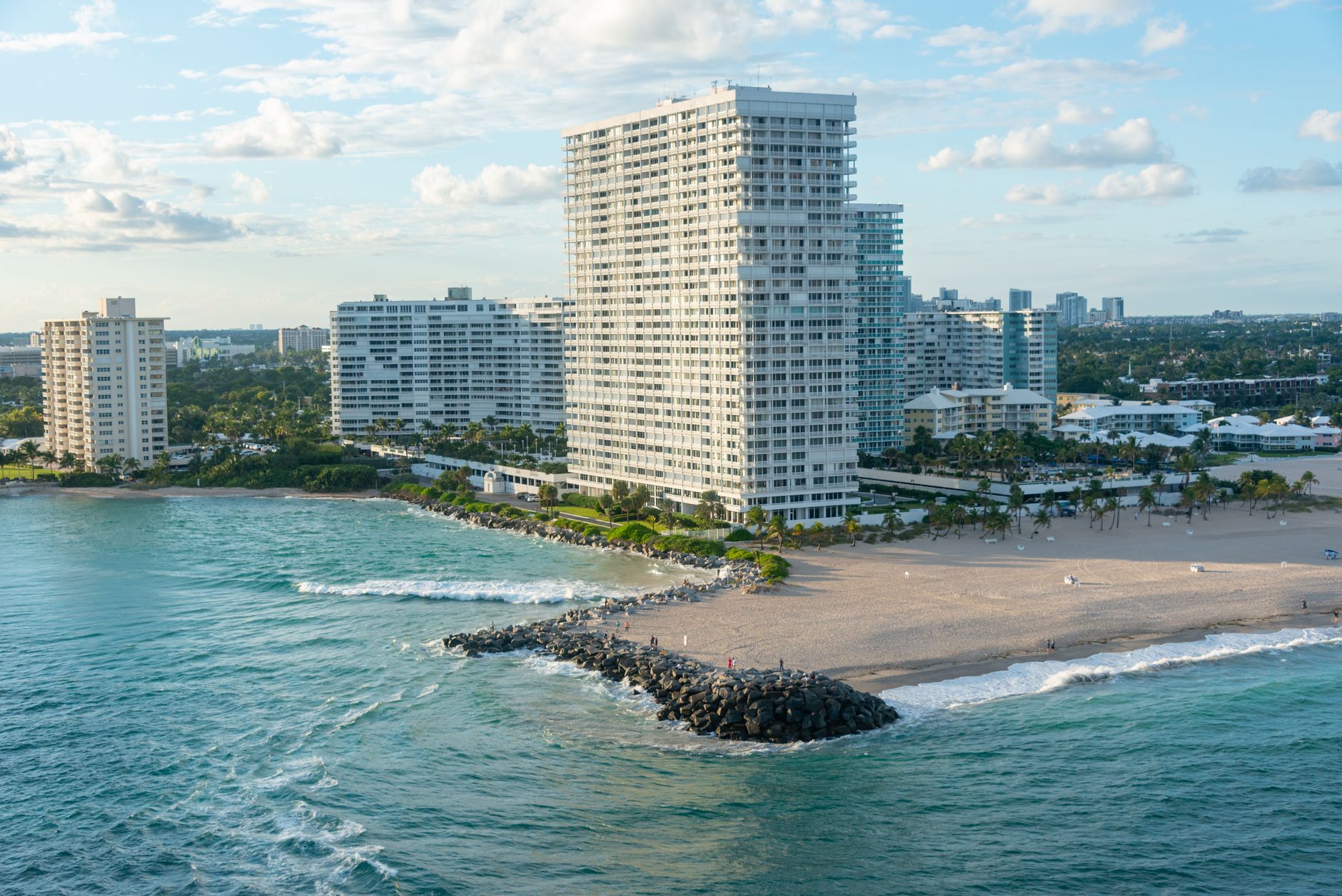
Bal Harbour incorporated as a village in August 1946 on land that had served as an Army barracks during World War II. Today it holds about 3,000 full-time residents on roughly 300 acres between the Atlantic Ocean and Indian Creek, one of the smallest and most tightly zoned municipalities in Miami-Dade County.
The village’s identity is inseparable from Bal Harbour Shops, the open-air luxury retail center developer Stanley Whitman opened in 1965 on land originally slated for a gas station and grocery store. Whitman brought Neiman Marcus to its first location outside Texas in 1971 and added Saks Fifth Avenue in 1976, making Bal Harbour the first shopping destination anywhere to house both. Cartier, Bulgari, Louis Vuitton, and Prada all opened their first locations outside New York there. That retail pedigree still shapes buyer demand today: a meaningful share of Bal Harbour’s condo buyers are purchasing a lifestyle built around walkable access to that level of retail and dining, not just an oceanfront address.
Low density is the other defining feature. The village’s zoning has kept building heights and unit counts far below what neighboring Sunny Isles Beach or Miami Beach allow, which is part of why inventory stays thin and why a handful of sales can move the median price significantly from quarter to quarter.
What’s Actually Selling
Roughly five condos have closed in Bal Harbour over the trailing 180 days at an average sale price of $6,858,750, a small enough sample that any single closing can shift the average considerably. That thin trading volume is normal for a village this size, and it means a buyer working from published medians alone can be misled about what a specific unit is actually worth.
St. Regis Bal Harbour Residences
Units at St. Regis have ranged from $3.1 million to $21.9 million, spanning everything from a compact oceanfront one-bedroom to full-floor residences with private elevator access. The building’s amenity program, five-star hotel services, spa, and direct beach access are the primary drivers of its premium over older Bal Harbour towers.
Bal Harbour’s broader luxury context tracks the wider Miami-Dade market. Regional luxury thresholds moved to roughly $2.3 million for single-family and $6.0 million for condominiums in the first half of 2026, with the ultra-luxury condo threshold in Miami-Dade specifically set near $10 million, according to Florida Realtors research and statistics. Miami’s broader luxury median reached $4,957,799 in April 2026, up 12.8 percent year over year, which gives useful context for how Bal Harbour’s $6.8 million median fits into the regional picture.
Oceanfront Towers vs. Bay Side Streets

Most of Bal Harbour’s inventory sits in oceanfront condominium towers along Collins Avenue, but the village also holds a smaller inventory of single-family homes on the streets west of the shops, closer to Biscayne Bay. These properties trade far less frequently than condo units and rarely show up in a quick search, since owners often sell privately through broker networks before a listing ever goes public.
The two property types serve different buyers. A condo buyer at St. Regis or one of the other oceanfront towers is generally purchasing lock-and-leave convenience, hotel-style services, and direct beach access, often as a second or third home. A buyer on the bay side streets is usually purchasing a full-time residence with a private lot, and is taking on direct responsibility for structural maintenance, seawall condition, and landscaping that a condo association would otherwise handle.
Neither option is inherently the stronger investment. The right choice comes down to how the buyer intends to use the property and how much day-to-day management they want to take on themselves.
A few practical differences worth weighing before touring either type:
- Condo buyers absorb a share of building-wide reserve funding through their assessments, while single-family owners fund their own repairs directly
- Bay side homes typically require flood elevation and seawall inspections that oceanfront condo buyers do not need to arrange individually
- Condo association rental restrictions can limit how a unit is used if the buyer later wants investment income, while single-family homes generally carry fewer use restrictions
Buyers considering either path should have their broker pull comparable sales specific to the property type and decade of construction, not a village-wide average.
Distance from Bal Harbour Shops is another variable worth pricing separately. Units and homes within easy walking distance of the retail center tend to carry a premium over otherwise comparable properties a few blocks further north or west, since a share of buyers are specifically purchasing walkability to that retail and dining corridor rather than square footage or view alone.
Carrying Costs: Taxes, Insurance, and Association Fees
Bal Harbour’s total millage rate runs approximately 16.8872 mills, or roughly 1.69 percent of assessed value before any exemptions, which is on the lower end for Miami-Dade’s oceanfront municipalities. Exact rates and any applicable exemptions should be confirmed directly with the Miami-Dade County Property Appraiser before closing, since assessed value resets to purchase price the year after a sale.
Insurance is the bigger variable for most buyers. As a barrier island community directly on the Atlantic, Bal Harbour properties fall within FEMA-mapped flood zones that require flood insurance for any financed purchase, and often make sense to carry even on an all-cash deal. Buyers should confirm a property’s flood zone designation through FEMA’s flood map service before assuming a quoted insurance premium is representative.
Condo association fees have also moved substantially since Florida’s post-Surfside legislation required buildings 30 years and older to complete milestone structural inspections and fund full reserves rather than waive them. Older Bal Harbour towers have raised assessments to comply, and buyers evaluating a unit in a pre-2000 building should request the building’s most recent structural integrity reserve study alongside the standard condo financials before making an offer. A newer building’s higher purchase price sometimes carries a lower total cost of ownership once reserve funding is factored in.
Financing and Buying in Bal Harbour

Cash purchases remain common at the top of Bal Harbour’s market, particularly at St. Regis and other newer towers where buyers are often purchasing a second or third home and want to close quickly. Financed purchases are also routine, though jumbo loan underwriting for a $5 million or $10 million condo differs meaningfully from a conventional mortgage: lenders scrutinize the condo association’s reserve funding, litigation history, and rental restrictions as part of the approval, not just the buyer’s financials.
International buyers make up a meaningful share of Bal Harbour transactions, consistent with broader Miami-Dade trends. Foreign national buyers typically finance differently than domestic buyers, often through larger down payments or portfolio lending relationships rather than standard conforming loans, and should budget extra time in the closing timeline for additional documentation. The National Association of REALTORS research division tracks international buyer activity and financing patterns nationally, which is a useful starting point before a foreign national buyer approaches a Florida lender.
Most Bal Harbour condo purchases also require board application and approval, a process that can add two to four weeks to closing depending on the building. Buyers should submit board applications as early as the contract allows rather than waiting until financing clears, since board review runs in parallel with underwriting in a well-managed transaction and sequentially in a poorly managed one.
Bal Harbour for Investors
Bal Harbour is not a high-volume rental market compared to nearby Sunny Isles Beach or Miami Beach, in part because several of its condo associations restrict minimum lease terms and limit the number of times a unit can be leased per year. That restriction is a feature for owners who want a stable, low-turnover building rather than a source of short-term rental income, but it changes the investment math for a buyer specifically underwriting a vacation-rental strategy.
Where Bal Harbour has performed well for investors is appreciation and capital preservation rather than yield. Thin inventory, incorporated-village zoning that limits new supply, and proximity to Bal Harbour Shops have kept demand ahead of supply through multiple market cycles. An investor evaluating Bal Harbour against other South Florida luxury markets should weigh that appreciation profile against the lower cash-on-cash return relative to markets with fewer rental restrictions.
Buyers holding property through an LLC or trust for privacy or estate planning purposes should confirm the specific condo association’s ownership entity requirements before contract, since some Bal Harbour buildings require additional board disclosure when the buyer of record is not a natural person.
Compared against Sunny Isles Beach a few miles north or Miami Beach’s oceanfront corridor, Bal Harbour offers less transaction volume but tighter supply and a village government that has consistently resisted the kind of large-scale new development that can dilute pricing in a neighboring market over a decade. Investors weighing multiple South Florida oceanfront markets against each other should treat that supply constraint as the central variable, not amenities or finish quality, since most ultra-luxury towers across these markets now compete on nearly identical service standards.
Working With a Boutique Brokerage in a Small Market

A village of 3,000 residents with roughly 20 active condo listings at any given time is not a market that rewards a high-volume approach. Off-market activity is common in Bal Harbour, and a meaningful share of the best inventory moves through broker relationships before it ever appears in public search portals.
At MJI Realty Group, we work Bal Harbour the way the market actually operates: through direct relationships with the small number of agents and owners active in the village, not through mass marketing to a list. We are a boutique brokerage devoted to buying and selling luxury real estate for our clients, and our market expertise sets us apart in exactly this kind of thin, relationship-driven market. Typical Florida brokers do not offer their clients real estate confidentiality because they don’t have to. We don’t have to either, but we do, which matters to buyers and sellers who prefer their transaction stay out of public view.
If you are considering a purchase or sale in Bal Harbour, or want a clearer read on how a specific building’s reserve funding and assessment history compares to the rest of the village, MJI Realty Group works with buyers and sellers across South Florida’s luxury oceanfront markets. Real estate decisions depend on individual circumstances, and this article is general information, not legal, tax, or investment advice for your specific situation. A licensed Florida attorney or tax professional should review any purchase or sale before you sign a contract.