Why Florida Multifamily Is Attracting Serious Capital
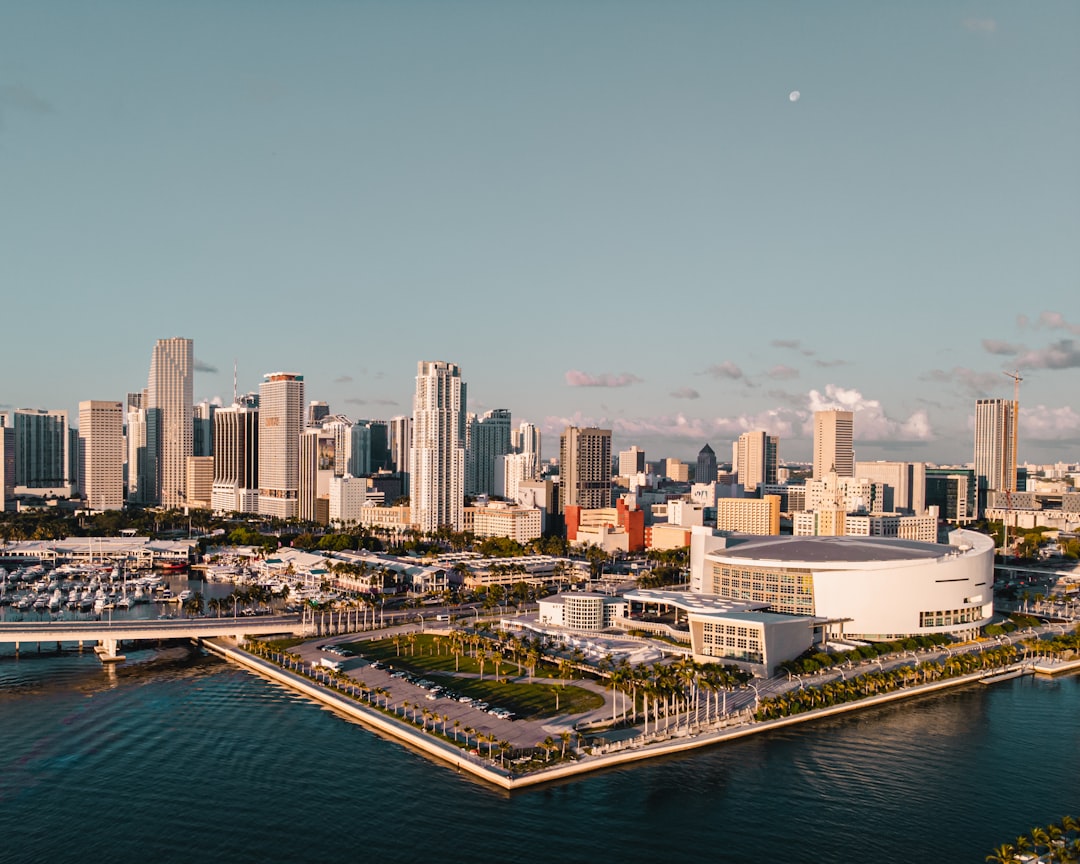
The numbers tell the story clearly. In Q1 2026, Miami-Dade’s multifamily market posted the lowest vacancy rate among all major South Region metro areas at 6.6%, while year-over-year asking rents rose 0.7%, the highest rent growth of any comparable metro in the region. Investment sales volume in South Florida multifamily reached $5 billion over the trailing 12 months, with Class A properties accounting for $3.3 billion of that total. The trailing average price per unit across South Florida hit $312,091 through Q1 2026.
Those aren’t coincidences. Florida absorbed more than 400,000 net new residents in 2024 alone, and the influx shows no sign of reversing. High-income transplants from the Northeast and Midwest, relocating for the state’s zero income tax, warm climate, and business environment, have pushed demand for premium rental units. A decade of underbuilding relative to population growth kept vacancy low even as a large wave of new supply came to market between 2021 and 2025.
What makes this moment different from the 2021-2022 frenzy is the supply picture. Miami’s multifamily inventory growth in 2026 is projected at just 1.6%, the slowest pace the market has seen in a decade, tied with Fort Lauderdale for the lowest rate among major Florida metros. New construction starts declined sharply as higher construction costs and tighter development financing squeezed the pipeline. For existing property owners, that means less competition from newly delivered product for the next 18 to 24 months.
Florida Realtors’ 2026 market outlook projects a more balanced environment across the state, a useful signal for investors who watched rents surge and then wobble through 2023. The correction has played out; the market is stabilizing on fundamentals rather than cheap-debt speculation. For investors who missed the last cycle, South Florida multifamily offers a clear second window, one built on demographics and supply restraint rather than zero-rate financing.
South Florida Submarkets: Where Performance Differs
The South Florida multifamily market is not a single trade. Performance varies sharply by submarket, and that variance creates both opportunity and risk depending on where you buy.
Miami-Dade leads the region in rent growth in absolute terms, but the gains are concentrated. Overtown-Miami posted 13% year-over-year rent growth through Q1 2026, driven by supply constraints and sustained demand pressure in the neighborhood. Miami Beach rents are up 10% over the same period. These figures attract capital, but entry prices reflect that momentum; cap rates in top Miami submarkets have compressed to account for the performance.
Brickell, by contrast, saw rents fall 4% year-over-year. That is a supply response rather than a structural breakdown. The downtown Miami submarket absorbed an enormous wave of new luxury apartment units between 2022 and 2025, and stabilization takes time. Investors buying in Brickell today are underwriting a market working through supply, not one in permanent decline. The question is your timeline to stabilization and your ability to carry near-term lease-up risk.
In Broward County, Fort Lauderdale has become the development focal point, with half of all new apartments built countywide since 2020 concentrated in the downtown submarket alone. Miami Realtors data through Q1 2026 identifies Broward County as an emerging top multifamily investment market, supported by more accessible price points than Miami-Dade and relatively stable occupancy. Investors seeking value over the marquee Miami address often find stronger risk-adjusted returns in Fort Lauderdale’s outer submarkets and in Hollywood and Deerfield Beach.
Palm Beach County’s standout is West Palm Beach Central, which recorded 10% rent growth year-over-year. The concentration of financial-sector and professional-services relocators into downtown West Palm Beach has created real rental pricing power in that corridor. Downtown Palm Beach Gardens and Boca Raton have shown resilience without the volatility visible in Miami’s core.
The consistent theme: rents rose in 56% of South Florida submarkets through Q1 2026. Investors who understand which 56% they are buying into, and why, are positioned very differently from those who treat the market as uniform.
How to Analyze a Multifamily Property

A few core metrics determine whether a multifamily deal makes sense. Run all of them before you make an offer.
Net Operating Income (NOI): Start here. NOI equals gross rental income minus all operating expenses: insurance, property taxes, maintenance, management fees, reserves, and a vacancy allowance. It does not include debt service. A property that shows strong gross income but carries heavy insurance costs (which in South Florida can reach $15,000 to $25,000 per year for a mid-size building, or more) may underperform dramatically after expenses. Rebuild the NOI from scratch using current market costs, not the seller’s historical figures.
Cap Rate: Divide NOI by the purchase price. South Florida multifamily cap rates averaged near 5.0% to 5.6% across all property classes in Q1 2026. A $3 million building with $165,000 in annual NOI carries a 5.5% cap rate. Cap rates tell you what the market is paying for a dollar of income. If your target return requires a 7% cap rate and the market clears at 5.0%, you need to either find off-market properties or accept that your entry point must be lower.
Price Per Unit: The trailing 12-month average price per unit in South Florida hit $312,091 through Q1 2026. That benchmark is a quick reality check: when an asking price implies $420,000 per unit in a submarket where comparables trade at $280,000, the gap demands an explanation before you proceed.
Gross Rent Multiplier (GRM): Divide purchase price by annual gross rents. A $2.4 million building producing $200,000 in annual gross rent carries a GRM of 12. Use the GRM as a fast screening filter across properties of similar size, not as a final underwriting tool. It doesn’t account for expense differences, which in South Florida are significant.
Expense Ratio: In South Florida, operating expenses for multifamily properties typically run 40% to 55% of gross income, skewed higher by insurance costs. If a seller’s pro forma shows 30% expenses, rebuild the model with realistic local costs before making any offer. The gap between the seller’s number and your underwritten number is where deals either get done or fall apart.
Financing a Florida Multifamily Property
How you finance a multifamily property in Florida depends primarily on unit count, and the financing landscape changes materially at the five-unit threshold.
Properties with one to four units qualify for residential financing: conventional mortgages, FHA loans for owner-occupants, and portfolio lenders with their own underwriting standards. Interest rates and approval are based on your credit score, income documentation, and debt-to-income ratio. Residential financing is straightforward for most investors buying their first multifamily property.
Five units and above cross into commercial financing. Agency loans through Fannie Mae’s DUS program and Freddie Mac’s Optigo program are the workhorses of multifamily investment nationally for stabilized properties; they offer 30-year amortization, competitive rates, and non-recourse terms for qualifying buildings. Florida Realtors’ analysis of multifamily market stabilization points to improving fundamentals that support agency lending qualification in most South Florida submarkets heading into 2026.
DSCR loans have become a primary financing tool for Florida investors, particularly those who are self-employed, carry complex income structures, or are building larger portfolios where traditional income documentation doesn’t capture the full picture. DSCR loans underwrite based on the property’s income relative to its debt obligations rather than the borrower’s personal tax returns. Fixed DSCR rates in May 2026 run approximately 6.125% to 7.5%; adjustable rates run 5.125% to 6.125%. Most lenders require a minimum DSCR of 1.0 to 1.25, meaning the property must generate at least $1.00 to $1.25 for every $1.00 of debt service. Down payment requirements typically run 20% to 25%.
For value-add plays, bridge loans provide short-term financing through a renovation and lease-up phase, with a planned exit into permanent agency financing once the property reaches stabilized occupancy. The key is entering the bridge with a clear, realistic timeline and cost estimate for the value-add work, not an optimistic one.
Due Diligence Before You Close
Florida multifamily due diligence has some state-specific dimensions that out-of-state investors routinely underestimate. Getting these right before you close saves significant money and avoids surprises that erode returns.
Rent Roll Review: Verify every lease against the rent actually being collected. Look for month-to-month tenants, below-market leases signed in recent renewals, and any delinquency patterns. A building that shows 95% occupancy on paper but carries 15% of units in arrears is a fundamentally different asset than what the listing advertised. Request 12 months of bank statements showing rent deposits alongside the rent roll.
Insurance Costs: Insurance is the line item that most frequently surprises South Florida multifamily buyers. A building insured for $18,000 per year in 2021 may cost $35,000 or more to insure today, after market rate corrections and carrier exits following recent hurricane seasons. Request a copy of the current policy, verify coverage amounts and exclusions, and get an independent insurance quote before finalizing your underwriting model. Flood zone designation matters: check FEMA flood maps for the property address before any LOI.
Physical Inspection: Roof condition, HVAC systems, plumbing, electrical panels, and any evidence of water intrusion are the priorities in a Florida multifamily building. Deferred maintenance on roof and mechanical systems can absorb years of cash flow. A $180,000 roof replacement on a 24-unit building wipes out more than a full year of NOI at typical South Florida margins. Budget reserve analysis is part of the underwriting, not an afterthought.
Property Tax Exposure: Florida’s non-homestead properties are not capped in the same way as homestead residential properties. When a building sells, the county assessor typically reassesses near the sale price. The seller’s current tax bill may dramatically understate your post-purchase tax obligation. Pull the property record from the county property appraiser’s website before submitting an offer. Miami-Dade County Property Appraiser, Broward County Property Appraiser, and Palm Beach County Property Appraiser all maintain public portals where you can verify current assessed values and tax history for any parcel.
Tax Advantages for Florida Multifamily Investors
Florida’s tax structure is one of the clearest, most consistent advantages for multifamily investors in the state. Understanding these benefits is essential to modeling true after-tax returns.
No State Income Tax: Every dollar of net rental income goes to your federal return only. No Florida state income tax layers on top. For investors who own rental properties in California, New York, or Illinois, the difference compounds materially as portfolio size grows. A $200,000 NOI in California faces a top state marginal rate of 13.3% for high earners; the same income in Florida faces zero.
Depreciation: The IRS allows residential rental property to be depreciated over 27.5 years using the straight-line method, as detailed in IRS Publication 527 (Residential Rental Property). On a $2 million purchase with $400,000 allocated to land, the building basis of $1.6 million generates approximately $58,181 per year in depreciation. This paper loss offsets rental income, often reducing or eliminating taxable income even when the property is producing positive cash flow.
Cost Segregation: A cost segregation study reclassifies components of the building, including flooring, cabinetry, lighting fixtures, landscaping, and land improvements, into shorter depreciation lives of 5, 7, or 15 years. For properties purchased at $1.5 million or more, the first-year acceleration benefit regularly exceeds the cost of the study by a significant multiple.
1031 Exchange Eligibility: Multifamily properties qualify for 1031 exchange treatment, allowing investors to defer capital gains taxes by reinvesting proceeds from a sale into like-kind replacement property. A South Florida investor selling a 10-unit building after a decade of appreciation can roll the entire gain into a larger asset without a tax event at sale, compounding the portfolio without the friction of a capital gains bill.
No Florida Estate Tax: Florida imposes no state-level estate or inheritance tax, an advantage for investors building real estate wealth across generations.
Risks That Florida Multifamily Buyers Must Assess
No honest multifamily analysis omits the risks. These are the ones that matter most in South Florida specifically.
Insurance Cost Pressure: Property insurance in South Florida has risen sharply since 2020, driven by hurricane losses, reinsurance market dislocations, and carrier exits from the Florida market. Commercial property insurance for a multifamily building can represent 20% to 30% of total operating costs, well above national averages. Conservative underwriting means projecting insurance increases into your holding period model, not just locking in today’s cost. If a deal only works with current insurance rates, it may not work in year three.
Submarket Oversupply: Brickell’s 4% rent decline year-over-year is the most visible example of a market still working through a concentrated supply wave. Similar dynamics appear in any submarket where a large number of new units delivered simultaneously. Before committing to a price, research the specific submarket’s pipeline for the next 18 to 24 months. New units scheduled to deliver while you own the property affect your vacancy rate and your ability to push rents.
Post-Purchase Property Tax Step-Up: When a building sells, the county assessor reassesses near the transaction price. A prior owner who held the property for 20 years may have a heavily capped assessed value. Your tax bill on day one post-closing could be double or triple the seller’s current obligation. Model the post-purchase tax expense explicitly, not the seller’s current figure.
Hurricane and Flood Exposure: South Florida’s hurricane risk is not theoretical. Flood zone designation affects insurance costs, lender requirements, and in some cases FEMA compliance obligations. Properties in designated Special Flood Hazard Areas carry additional cost and regulatory complexity. Review FEMA flood maps for the property address and understand what the designation means for insurance requirements and financing options before you are under contract.
Working With a South Florida Multifamily Broker
Multifamily properties in South Florida trade in a market where relationships drive outcomes. The best deals, whether listed or not, go to investors who have access to the right network before listings reach broad distribution. Off-market opportunities in this space are real: a 16-unit building in Fort Lauderdale that an owner is ready to sell without a full marketing campaign, a Palm Beach portfolio being divested for estate reasons, a Miami-Dade building where the owner’s timeline doesn’t fit a traditional listing process.
At MJI Realty Group, we work with buyers and sellers of multifamily and investment properties across Miami-Dade, Broward, and Palm Beach. Our clients range from investors acquiring their first four-unit building on residential financing to experienced portfolio owners transacting larger commercial apartment assets. We know the submarket fundamentals, understand the operating cost realities specific to South Florida, and help clients evaluate properties with realistic underwriting rather than seller pro forma projections.
If you are analyzing a Florida multifamily investment or looking to sell a property from your existing portfolio, reach out to discuss what the current market looks like and where the opportunities are concentrated right now.
Real estate decisions depend on individual circumstances; this is general information, not legal, tax, or investment advice for your specific situation.