What Pre-Leasing Means for Commercial Investors
Most commercial deals happen after a building exists. A landlord shows a space, a tenant negotiates, and a lease gets signed. Pre-leasing inverts that sequence. The tenant commits before the space is ready, often before construction begins. The landlord commits to delivering a space that meets agreed specifications by a defined date. Both parties accept risk they would not face in a standard deal, and both can benefit substantially when the deal is structured correctly.
For investors, pre-leasing a commercial development means entering a project with contractual rental income already on paper. That changes the risk profile of the entire investment. It is the difference between pitching a lender on projected rent and showing a signed lease. It also affects valuation when the property eventually trades, since a stabilized asset with a long-term tenant in place commands a different cap rate than vacant product searching for occupancy.
Florida law treats commercial leases under a different framework than residential tenancies. Part I of Chapter 83 of the Florida Statutes governs commercial landlord-tenant relationships and offers considerably fewer statutory protections than residential law. That means the lease document itself does most of the work. In a pre-lease specifically, where the space does not yet exist, what the lease says about delivery obligations, buildout specifications, and commencement triggers is the foundation of the entire deal. Getting those provisions right, before a shovel goes in the ground, is what separates successful pre-lease investments from costly disputes.
Florida’s Market in 2026: Why Pre-Leasing Makes Sense Now

Florida’s commercial real estate market heading into the second half of 2026 is defined by a significant divide between supply and demand in the most active submarkets. Retail vacancy across Miami-Dade and Broward counties has remained near 3 percent, well below national averages and historically low for the region. Industrial vacancy in infill locations such as Hialeah, Doral, and the Medley corridor has been similarly constrained, with small-bay asking rents pressing above $20 per square foot net in competitive locations.
For tenants who need quality space in a specific submarket, waiting for the right building to become available is often not a viable approach. Pre-leasing gives a tenant the location they want, built to their specifications, at a rent rate locked in before delivery. That commitment can be 18 to 24 months before opening day. For a developer, that signed lease does something concrete: it validates the project economics and opens conversations with construction lenders who otherwise require evidence of market demand before committing capital.
One structural tailwind benefiting both sides of the pre-lease table is Florida’s elimination of the commercial lease sales tax, effective October 1, 2025. Florida had been the only state in the country imposing a broad sales tax on commercial rents. Its removal has lowered the effective cost of occupancy for every commercial tenant in the state. For tenants evaluating a multi-year pre-lease commitment, the savings over a full lease term are meaningful and make longer commitments more financially attractive.
According to Florida Realtors® commercial market research, investor demand for Florida commercial product has remained strong relative to comparable Sun Belt markets, supported by population growth, a business-friendly regulatory environment, and the ongoing absence of a state income tax.
Industrial Pre-Leasing in South Florida
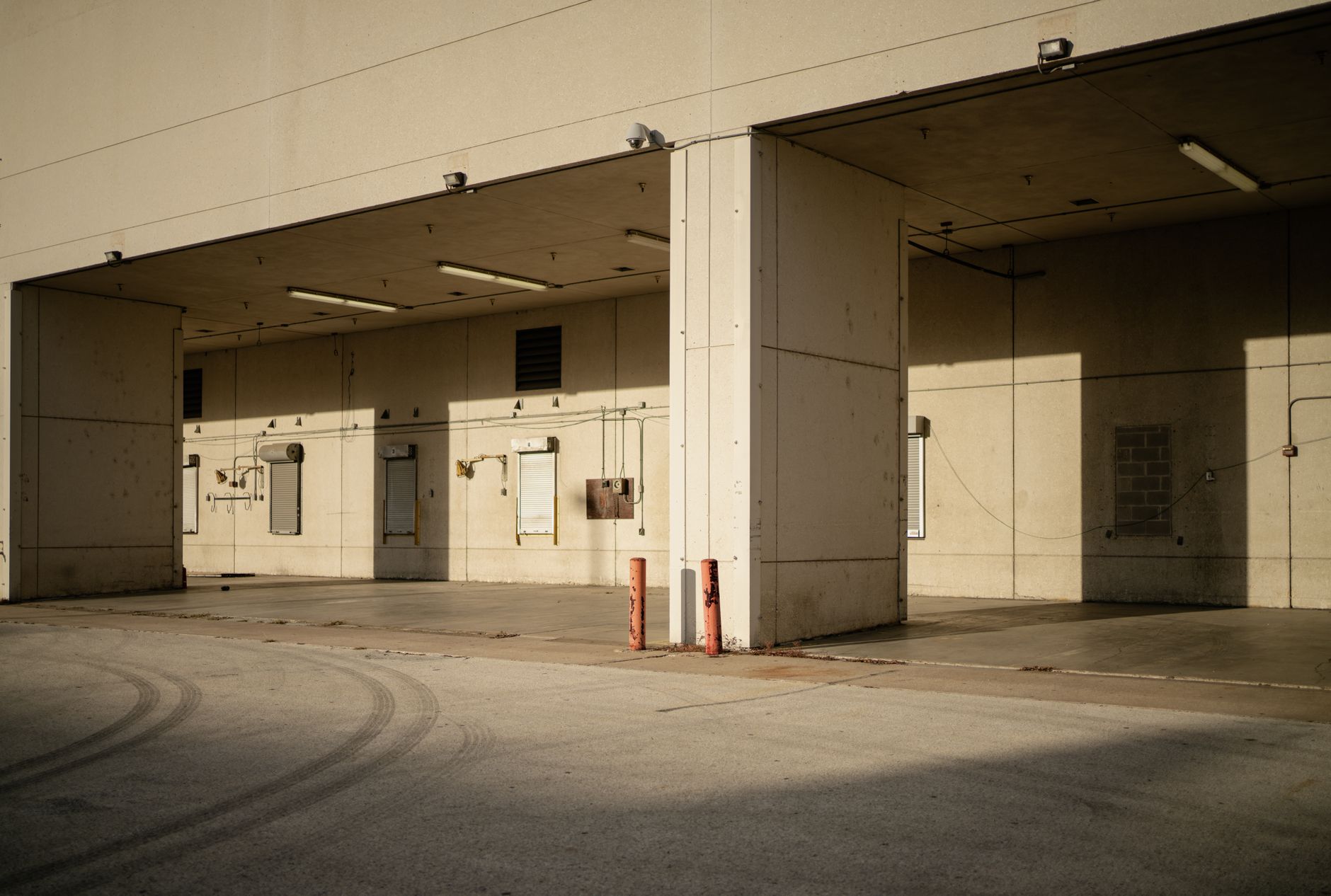
Industrial is the asset type where pre-leasing is most common and most structured in South Florida right now. The combination of near-zero vacancy in infill submarkets, constrained land availability, and rising construction costs means that a well-located new industrial project rarely stays on the market long once announced. Tenants seeking quality space in Miami-Dade or Broward industrial corridors often have no choice but to commit to product that is still being permitted or built.
The distinction between small-bay and bulk industrial matters significantly here. Small-bay product, typically defined as buildings under 150,000 square feet with suite sizes ranging from 5,000 to 50,000 square feet, commands a rent premium over larger warehouse product, often 15 to 20 percent higher on a per-square-foot basis in South Florida infill locations. Pre-leasing activity in this segment typically involves multiple tenants, each taking individual suites within a larger building, which means a developer must assemble pre-leases from several parties before lenders will consider the project adequately pre-leased.
Bulk industrial, by contrast, often involves a single anchor tenant taking the entire building. These deals can be structured as build-to-suit arrangements, where the developer constructs the facility entirely to that tenant’s operational specifications. Asking rents for quality Broward County bulk industrial have ranged from approximately $18 to $28 per square foot net, depending on clear height, dock configuration, and proximity to I-95 or the Florida Turnpike.
Investors acquiring or developing industrial product in South Florida should understand that pre-lease conversion rates from letter of intent to signed lease tend to be higher in tight submarkets than in markets with significant competing supply. Tenant motivation increases when alternatives are limited.
Retail and Office Pre-Leasing: How the Dynamics Differ
Retail pre-leasing in Florida follows a different logic than industrial. The anchor tenant anchors everything. When a grocery-anchored center or power center is being developed, a signed anchor lease, or even a committed letter of intent from a national retailer, is typically what allows a developer to approach lenders, pull permits, and begin engaging inline tenants.
For investors acquiring a retail development, the presence or absence of a signed anchor pre-lease is the single most important underwriting factor. A center with a committed national grocery anchor in a high-traffic South Florida corridor carries a fundamentally different risk profile than a speculative retail project depending on hypothetical tenant demand. Inline tenants, the restaurants, service businesses, and specialty retailers filling the smaller bays alongside an anchor, negotiate their pre-leases after the anchor is committed. Their terms are typically less favorable because they depend on the anchor for traffic, but they can still negotiate meaningfully on tenant improvement allowances, free rent periods, and co-tenancy protections that limit their exposure if an anchor ever vacates.
Office pre-leasing in South Florida has shifted strongly toward class A and class A-plus product in submarkets benefiting from corporate relocations. The West Palm Beach and Aventura markets have absorbed significant office demand as major financial services and technology firms have established or expanded South Florida operations in recent years. Pre-leasing new class A office in these locations requires understanding which tenants are actively seeking space, what their credit profiles look like, and what buildout standards they require, all factors a commercial broker with submarket knowledge will have tracked long before a public announcement of new supply.
How to Structure a Commercial Pre-Lease Agreement
The pre-lease document is where most of the legal and financial work happens. Unlike a standard lease on a stabilized building, a pre-lease must address conditions that will change between signing and commencement. The key provisions every investor and developer should have in place:
- Delivery date and long-stop date. The lease should specify when the landlord delivers a permitted, shell-complete space. The long-stop date is the outer limit: if the landlord fails to deliver by this date, the tenant typically holds the right to terminate without penalty.
- Commencement trigger. Rent commencement ties to one of three events: a specific calendar date, issuance of a certificate of occupancy, or the tenant opening for business. Which trigger applies has direct financial consequences for both sides and must be defined without ambiguity.
- Buildout specifications. When the landlord is delivering a specific fit-out, the lease should include a construction exhibit specifying materials, systems, and finishes in sufficient detail to prevent disputes during the build.
- Rent escalation. Pre-leases often run five to fifteen years. Annual escalation clauses, typically 2 to 3 percent per year or tied to a percentage of the Consumer Price Index, are standard and should be modeled into return projections before signing.
- Use clause and exclusivity. Retail tenants often negotiate exclusive use rights limiting competing businesses the landlord can place in the same center. The use clause also defines what the tenant may and may not operate, which matters for insurance and zoning compliance.
- Assignment and subletting rights. As businesses grow, shrink, or change ownership, tenants may need to assign their lease or sublease part of their space. Investors should understand the conditions under which assignment is permitted and whether landlord consent is required.
The National Association of REALTORS® consistently identifies lease term structure and escalation mechanics as primary factors in the pricing difference between credit-tenanted and speculative commercial assets. Getting these terms right at the pre-lease stage is what creates that pricing advantage at disposition.
Tenant Improvement Allowances and Free Rent

The two largest financial concessions in any commercial pre-lease negotiation are the tenant improvement allowance and free rent. Both are established upfront and embedded directly in the lease economics.
The tenant improvement allowance, commonly called TI, is the cash a landlord provides to fund the tenant’s buildout of the space. In Florida commercial pre-leases, TI allowances run a wide range depending on property type, market conditions, and lease length. Industrial product, which typically requires lighter interior build-out, might see TI packages of $10 to $25 per square foot. Office and retail, where fit-out costs are substantially higher, can see TI of $50 to $90 per square foot or more on long-term leases in competitive submarkets.
From the investor’s perspective, TI is not a concession given away. It is a capital outlay that amortizes over the lease term, priced into the effective rent. A $500,000 TI allowance on a 10-year lease at a specific rent level is built into the deal economics. If the tenant vacates at year four and the landlord must re-tenant the space, the unamortized TI becomes a realized loss. Investors should model TI recovery in their hold period analysis, accounting for the possibility of early termination rather than assuming the tenant runs to the end of term.
Free rent is more straightforward. The tenant occupies the space but pays no base rent for a defined period at the start of the lease, typically to allow time for buildout and an orderly opening. Industrial spaces in competitive South Florida submarkets have typically carried 1 to 3 months of free rent on new leases. Office product, where buildout timelines are longer, may run 4 to 6 months. Free rent is a cash flow gap for the investor in the short term, but it is often the concession that closes a deal with a quality tenant on a long-term lease, and the net operating income over a full 10-year term consistently justifies the upfront period.
For how tenant improvement costs interact with federal depreciation rules, including the qualified improvement property treatment available to commercial landlords, IRS Publication 946 covers business asset depreciation schedules in detail. A CPA with commercial real estate experience can help structure TI terms to optimize after-tax returns on a pre-leased development.
How Pre-Leasing Affects Your Construction Loan
A pre-leased commercial development is more financeable than a speculative one, and lenders price the difference directly into loan terms. Construction lenders underwriting commercial projects assign meaningfully different risk weights to a project with signed pre-leases versus one where the developer expects to find tenants after delivery. The practical result: lower interest rates on the construction loan, higher loan proceeds as a percentage of total project cost, and sometimes the difference between a project receiving financing at all versus being placed on hold indefinitely.
Lenders typically require a pre-lease percentage that demonstrates market validation before releasing construction funds. For multi-tenant industrial or retail projects, that threshold often falls between 30 and 50 percent of net rentable area under signed leases or committed letters of intent. For single-tenant build-to-suit projects, a 100 percent pre-lease with a creditworthy national tenant can unlock very competitive debt terms that would not otherwise be available on a speculative basis.
The Mortgage Bankers Association projected commercial mortgage originations of approximately $805 billion for 2026, a 27 percent increase over 2025 levels, as interest rates moderated and capital returned to commercial real estate lending. For Florida developers and investors, that improved financing environment means construction loans are more accessible than they were in 2023 and 2024, particularly on projects where pre-leasing has already demonstrated market demand. In that environment, having signed pre-leases before approaching a lender reduces perceived risk, which translates into better loan pricing that directly improves investor returns at project completion.
South Florida Submarkets With the Strongest Pre-Lease Demand
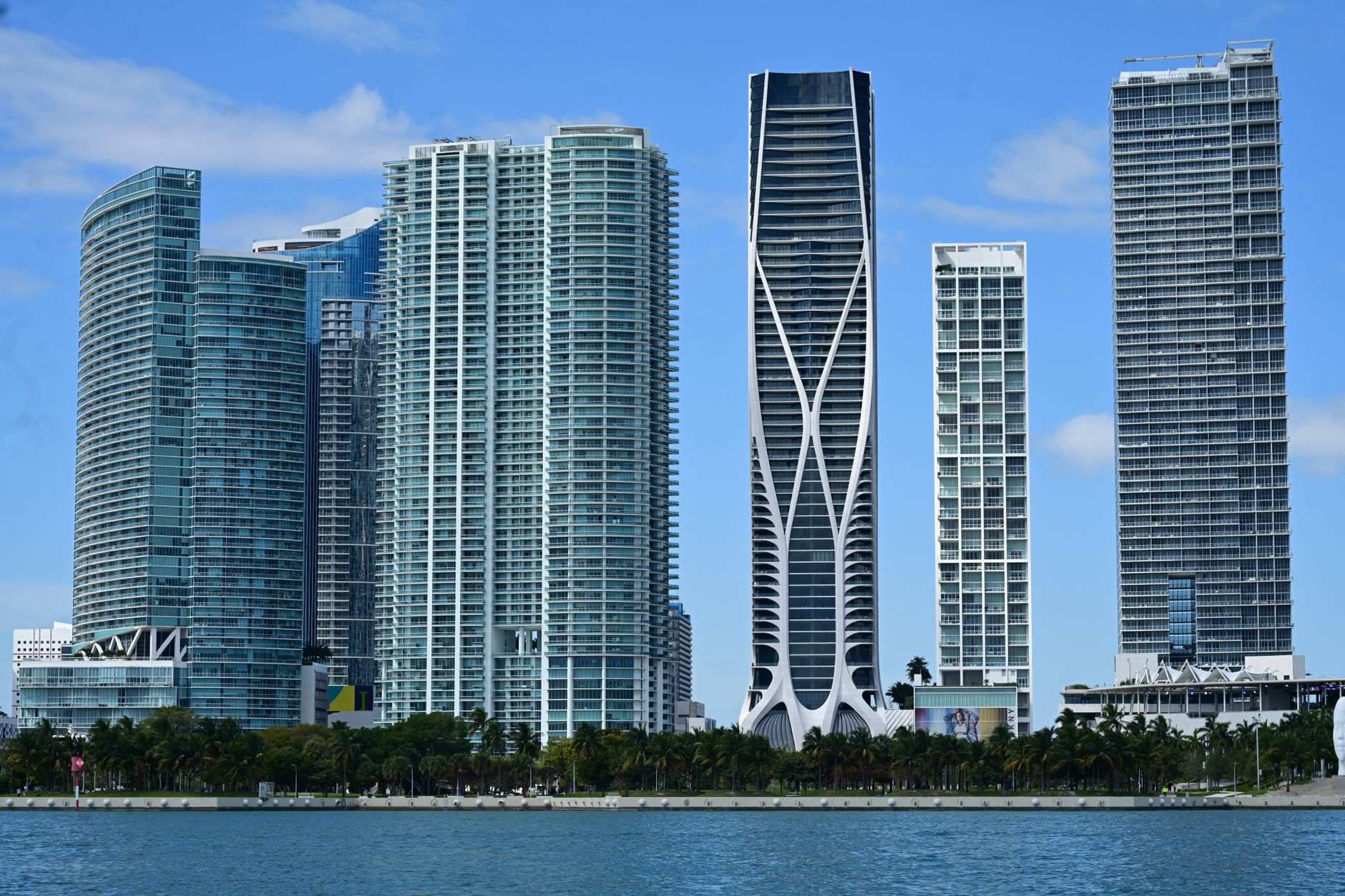
Pre-leasing dynamics vary significantly across Florida’s commercial submarkets. The opportunities are most compelling in locations where new supply has been constrained, tenant demand remains elevated, and the pipeline of competing projects is limited. In South Florida, several areas stand out for investors evaluating pre-lease commercial opportunities right now.
- Hialeah and Medley (Miami-Dade). These submarkets rank among the tightest industrial corridors in the southeastern United States. Land costs are high, new deliveries are rare, and tenants seeking small-bay infill industrial often have no practical option other than pre-leasing product still under development.
- Doral. Positioned adjacent to Miami International Airport with strong logistics and distribution demand, Doral industrial continues to attract tenants willing to commit early on new product to secure locations near major freight infrastructure.
- Pompano Beach and Coconut Creek (Broward). Northern Broward has absorbed consistent industrial and retail demand, with neighborhood center and strip retail activity tied to residential growth in this corridor.
- West Palm Beach and Palm Beach Gardens. The northern Palm Beach market is absorbing corporate relocations from financial services, wealth management, and technology sectors, creating demand for class A office and the retail that accompanies corporate campuses.
- Aventura and Brickell (Miami-Dade). High-profile corporate relocations from major financial and technology firms have renewed interest in premium class A office pre-leasing in these established urban submarkets.
Each of these submarkets carries different pricing, different tenant profiles, and different pre-lease structures. Knowing which submarket your project sits in, and who the most likely tenants are in that specific location, shapes every term in the negotiation that follows.
Bring In the Right Commercial Broker From the Start
Pre-leasing a commercial project is not something most investors should approach without experienced commercial representation. The negotiation touches real estate law, construction management, tax planning, and tenant credit analysis simultaneously. The right commercial broker is not just identifying prospective tenants. They know which tenants are actively expanding in the submarket, which credit profiles lenders will accept, and how to structure a letter of intent that protects both sides through due diligence.
Timing matters as much as the deal structure itself. Approaching a prospective anchor tenant before your construction timeline is firm, or failing to include adequate delivery protections in the letter of intent, can cost a developer months and significant money in re-negotiation. A broker who has closed pre-leases in your specific submarket brings that experience to the table before the first conversation with a prospective tenant.
MJI Realty Group works with commercial investors and developers throughout South Florida on acquisitions, pre-leasing strategy, and asset positioning. Whether you are acquiring a pre-leased development, assembling tenants for a project under construction, or evaluating a commercial opportunity where pre-lease status affects your underwriting, the right representation makes a measurable difference in how a deal comes together.
Real estate decisions depend on individual circumstances; this is general information, not legal, tax, or investment advice for your specific situation. Consult a qualified attorney, CPA, and licensed commercial broker before entering into any commercial pre-lease agreement.