Why South Florida Leads Global Luxury Real Estate
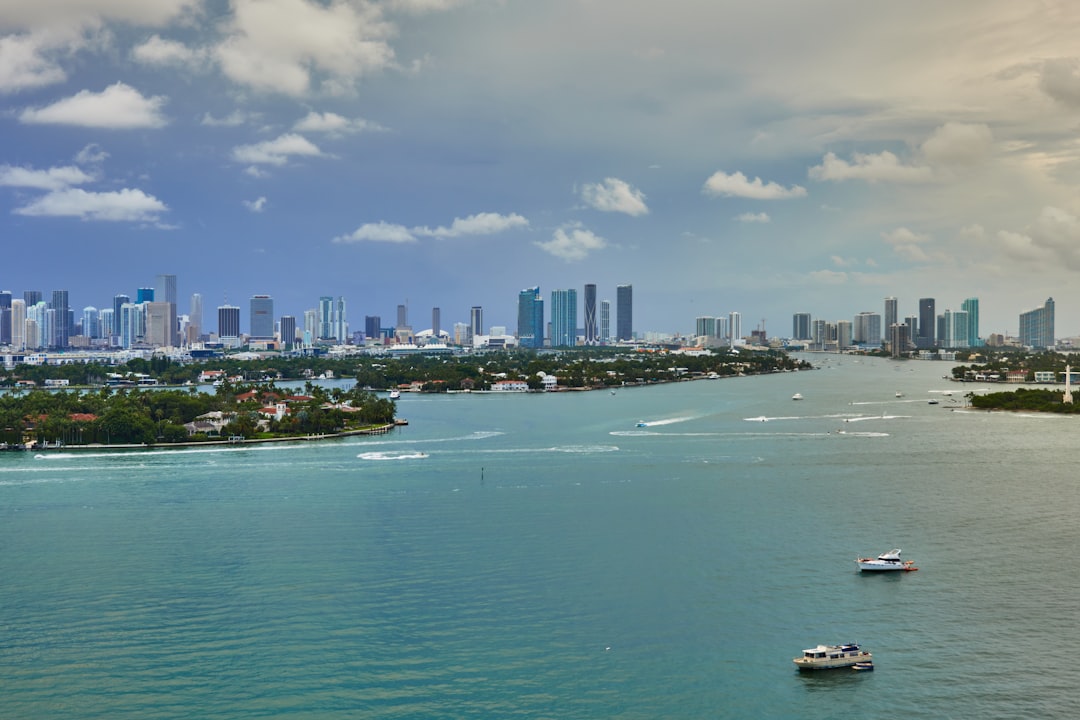
Miami is the number one market for foreign home buyers in the United States, a distinction no other American city comes close to matching. As of early 2026, foreign buyers account for roughly 15% of all Miami-area home purchases, compared to just 2% nationwide. That gap reflects geography, culture, tax policy, and the sheer concentration of luxury inventory South Florida has built over the past two decades.
Foreign investors committed approximately $4.4 billion to South Florida residential real estate in 2025, a 42% increase from the year prior. According to Florida Realtors’ 2025 international profile, Florida captured roughly 21% of all international residential purchases in the United States, totaling $11.8 billion in sales volume. The state has held the top position among all 50 states for international buyers for years running.
South Florida’s pull is structural. Miami International Airport connects nonstop to more than 60 international destinations. The city has a well-established international banking presence, a large multilingual professional community, and luxury inventory spanning ultra-modern oceanfront condos to sprawling waterfront estates on Biscayne Bay. For buyers from Latin America and Europe, South Florida sits in the same or adjacent time zones, making it practical for second-home owners who need to stay connected to their home markets while managing a U.S. asset.
Florida’s tax structure adds a financial rationale that does not exist in most major U.S. cities. The state has no personal income tax, no state-level estate tax, and no capital gains tax at the state level. For buyers relocating from high-tax jurisdictions abroad, those savings compound year after year.
The International Buyers Shaping the Market
Buyers from more than 73 countries purchased property in Miami-Dade in 2025, but a handful of countries drive the majority of closed transactions. Understanding who is buying, and why, gives every buyer context for what they are competing with and what inventory tends to attract the most demand.
Colombia finished as the top foreign purchasing country in South Florida in 2025, accounting for 13.1% of international property searches and a commanding share of closed sales. Colombian buyers favor Miami’s Brickell, Edgewater, and Miami Beach neighborhoods, with a strong preference for luxury condos in new or recently delivered towers. The appeal is partly cultural proximity, partly capital preservation in a stable, dollar-denominated asset.
Canada ranked second at 9.2% of international searches. Canadian buyers skew toward second-home purchases in Broward and Palm Beach counties, particularly the Fort Lauderdale beach corridor and Boca Raton. The seasonal pattern is consistent: Canadian buyers are especially active between October and March. Venezuela (7.4%), Argentina (6.3%), and Brazil (5.9%) round out the top five. European buyers from the United Kingdom, France, Germany, Italy, and Switzerland also appear in transaction records, though at lower volumes. Israeli buyers have a consistent presence in specific submarkets, notably Bal Harbour and Aventura.
The common thread across all these buyer profiles is a preference for quality, location, and liquidity. International buyers are not shopping for a compromise. They are acquiring a best-in-class asset in one of the most liquid luxury markets in the Western Hemisphere. About 51% of international purchases in 2025 were made entirely in cash, a reflection of how seriously these buyers take speed and certainty of close.
Property Types International Buyers Prefer

Condominiums dominate international buyer transactions in South Florida. According to the Miami REALTORS 2026 International Report, international buyers represent approximately 49% of new construction and new construction-related sales over an 18-month tracking period. Pre-construction towers in Brickell, Edgewater, Sunny Isles Beach, and downtown Fort Lauderdale attract buyers who want to close 18 to 36 months out and hold during the development period, often with deposits structured over multiple milestones.
Waterfront single-family estates are the second major category. Gated communities along the Intracoastal Waterway in Fort Lauderdale, Palm Beach, Coral Gables, and Pinecrest attract buyers who want private pools, deep-water dockage, and estate-scale square footage. These properties typically price between $5 million and $30 million, with ultra-prime waterfront often exceeding that range. South Florida recorded 361 residential property sales above $10 million in 2025 alone, the highest total since 2021, with international buyers accounting for a significant share of those transactions.
Investment-oriented buyers purchase multifamily properties, commercial buildings, and short-term rental eligible condos in submarkets that permit them. Miami Beach’s municipal restrictions on short-term rentals create a meaningful legal distinction. Buyers intending to generate rental income should confirm the specific building, unit designation, and municipal rules before contracting.
The all-cash preference among international buyers is strongest among Latin American buyers and reflects both the ease of closing and the desire to avoid the additional documentation and timeline that mortgage financing requires. For cash buyers, a 30-to-45-day close is achievable.
The Buying Process: What Foreign Buyers Should Expect
The Florida purchase contract is well-structured and highly standardized. Most transactions use the Florida Realtors/Florida Bar residential or commercial contract, both of which give buyers a defined inspection period, a financing contingency if applicable, and specific timelines for title review and closing. The process differs from purchase procedures in many international markets, so knowing what to expect before you make an offer matters.
Here is how a typical luxury purchase flows for an international buyer:
- Property search and offer: Your broker presents properties that match your criteria. Offers are submitted via contract, not by letter of intent. In a competitive South Florida luxury market, sellers who have priced correctly at $3 million to $10 million often see multiple offers within the first two to three weeks.
- Inspection period: The standard Florida contract provides 15 days to conduct all inspections. For a $5 million-plus waterfront property, plan for a licensed general inspector, a separate roofing inspector, a pool and spa inspection, and a seawall engineer if the property has direct water frontage. Inspection results are negotiable and often lead to repair credits or price adjustments.
- Title search and insurance: A Florida-licensed title company conducts a title search covering the full chain of ownership and flags any liens or encumbrances. Owner’s title insurance protects the buyer’s interest. In many South Florida transactions, the seller pays for the owner’s policy, though luxury contracts frequently negotiate this point.
- Closing: International buyers who cannot attend in person can sign closing documents remotely through a notarized, apostilled power of attorney executed in their home country, or via Florida-authorized remote online notarization platforms. The closing agent coordinates all parties and funds disbursement.
The full timeline from contract to closing runs 30 to 45 days for all-cash transactions and 45 to 75 days when mortgage financing is involved. Having your funds organized before submitting an offer is essential, since proof of funds or a pre-approval letter is typically required with the contract.
Financing Options for International Buyers
More than one-third of international buyers in South Florida use mortgage financing rather than cash, and the lending options are broader than many foreign nationals realize. Standard conforming loans backed by Fannie Mae or Freddie Mac require U.S. Social Security numbers and established U.S. credit histories, which most international buyers do not have. The programs most commonly used by international buyers fall into the non-QM (non-qualified mortgage) category, a well-developed segment of the South Florida lending market.
Foreign national programs allow qualification based on international credit history, an asset statement, or a combination of offshore financial documentation. These loans typically require a 30% to 40% down payment, with loan amounts available up to $5 million at many lenders and up to $50 million at portfolio lenders and private banks.
DSCR (Debt Service Coverage Ratio) loans are popular for investment property purchases. Qualification is based entirely on the property’s projected or actual rental income covering the monthly debt service, with no U.S. W-2, no tax returns, and no domestic credit score required. Down payments generally start at 25%.
Bank statement loans qualify the borrower based on 12 to 24 months of bank deposits rather than tax returns. These work well for self-employed buyers and business owners who have complex income structures but strong demonstrated cash flow.
Private banking relationships at major institutions with Latin American or European wealth management divisions can offer portfolio loans to high-net-worth international clients at competitive terms, often at 20% to 25% down for clients with significant deposited assets at the institution.
Rate premiums over standard domestic mortgage rates apply across all these programs, typically in the range of 1.5 to 3.0 percentage points above conventional rates, depending on the program, loan size, and buyer profile. For buyers who can close all-cash and refinance later, that is often a viable strategy if financing becomes desirable post-close.
FIRPTA: The Tax Rule Every Foreign Buyer Must Know
FIRPTA, the Foreign Investment in Real Property Tax Act, applies when a foreign person sells U.S. real property, not when they buy. Understanding this rule at the time of purchase prevents significant surprises at the time of sale, particularly for buyers acquiring luxury assets that may appreciate substantially.
Under IRS FIRPTA rules, the buyer in a transaction where the seller is a foreign person is required to withhold 15% of the gross sales price and remit it to the IRS within 20 days of closing. This withholding acts as a prepayment against the seller’s U.S. tax liability on the gain. On a $5 million sale, that means $750,000 is withheld at closing and forwarded to the IRS before the seller receives full proceeds.
Key exceptions and modifications buyers and sellers should know:
- If the buyer is an individual purchasing the property as a primary residence and the sale price is $300,000 or under, no withholding is required.
- If the sale price is $1 million or less and the buyer is purchasing the property for personal use as a residence, the withholding rate drops to 10%.
- If the seller’s actual tax liability is expected to be less than the withheld amount, the seller can apply to the IRS for a withholding certificate (Form 8288-B) before or at closing. If approved, the IRS authorizes reduced withholding.
Foreign buyers who intend to eventually sell should work with a U.S. tax attorney or CPA experienced in international real estate taxation before settling on an ownership structure. Whether to hold property in an individual name, a U.S. LLC, a foreign corporation, or a trust affects how FIRPTA applies, what the net tax exposure will be at sale, and what estate tax exposure exists. The National Association of REALTORS maintains a detailed FIRPTA reference that provides additional guidance on the mechanics.
Florida’s SB 264: Foreign Ownership Restrictions
Florida enacted Senate Bill 264 in 2023, restricting real property purchases by citizens and entities from seven designated countries of concern: China, Russia, Iran, North Korea, Cuba, the Maduro government of Venezuela, and Syria. Buyers from all other countries, including the vast majority of South Florida’s international buyer base, are not affected by these restrictions at all.
For buyers from the listed countries, the law imposes different levels of restriction depending on the country. The most extensive restrictions apply to China. Chinese citizens who are not U.S. citizens or lawful permanent residents and who are domiciled in China are prohibited from acquiring real property in Florida. A limited exception allows one residential property of up to two acres, provided it is not within five miles of a military installation, for buyers holding a valid U.S. visa.
A key legal development has shaped how the law works in practice: the Eleventh Circuit Court of Appeals has held that Chinese citizens who are domiciled in Florida rather than in China are not covered by the restriction, because the law applies to persons domiciled in China, not to all Chinese nationals as a class. Chinese nationals who live and work in Florida under lawful visa status may qualify under this distinction, though legal counsel is essential before proceeding.
All buyers of Florida real property are now required to sign an affidavit at closing attesting that they are not a prohibited buyer under SB 264. This is a standard part of every Florida real estate closing today, regardless of the buyer’s nationality. For buyers from Colombia, Canada, Argentina, Brazil, European countries, Israel, and the overwhelming majority of other nations, SB 264 has no practical effect on the purchase transaction.
Ongoing Ownership Costs to Plan For
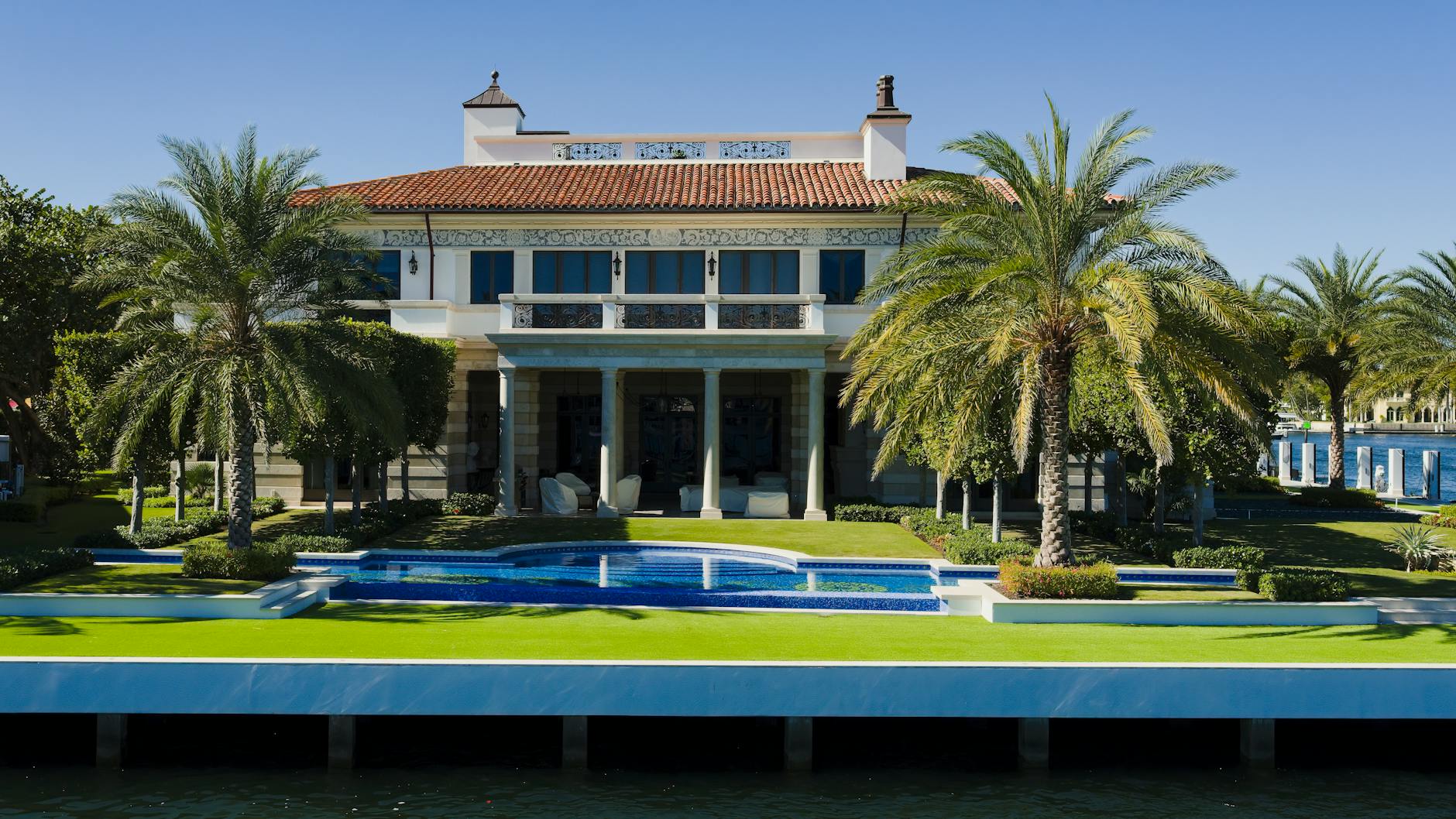
Buying is one decision. Owning is another. International buyers should build a complete annual cost model before selecting a specific property, since ongoing costs vary considerably by property type, location, and building.
Property taxes: Florida assesses property taxes based on the county property appraiser’s assessed value, which for a newly purchased property is typically set at or near the purchase price in the first year. Effective tax rates in Miami-Dade, Broward, and Palm Beach counties run roughly 1.5% to 2.2% of assessed value depending on location and applicable exemptions. The Florida homestead exemption reduces taxable value for primary residents, but most international buyers purchasing a second home or investment property will not qualify unless they establish full-time Florida domicile.
Condominium and HOA fees: Luxury condos and gated communities charge monthly maintenance fees. In high-amenity towers in Brickell or Miami Beach, HOA fees on a large unit can run $2,000 to $8,000 per month or higher. These cover amenities, insurance on common areas, and building reserves. Post-Surfside inspection and reserve funding requirements have elevated fees in older buildings, a factor worth reviewing in pre-purchase HOA financial documents.
Homeowners insurance: Florida’s insurance market requires careful budgeting. Luxury waterfront properties typically require separate wind, flood, and homeowners policies that together can cost $30,000 to $100,000-plus per year depending on construction type, flood zone, and coverage limits.
Property management: International buyers who spend part of the year outside Florida typically retain a licensed property management firm. Costs run 8% to 15% of gross rental revenue for income-producing properties, or a flat monthly fee for owner-occupied properties that need maintenance, vendor coordination, and oversight while the owner is abroad.
Working With a South Florida Brokerage

International buyers benefit significantly from working with a brokerage that knows the South Florida market at the specific price tier they are targeting, and that can coordinate the full purchase timeline including legal counsel, tax advisors, and title professionals working in parallel.
MJI Realty Group works with international buyers pursuing luxury residential and commercial property throughout Miami-Dade, Broward, and Palm Beach. The firm’s extensive contact network includes access to off-market inventory, pre-launch allocations in new construction projects, and sellers who prefer discretion over public listing exposure. For buyers moving quickly from abroad, that network changes what you can find and how fast you can move on it.
Whether you are buying a waterfront estate in Palm Beach, a pre-construction tower residence in Brickell, or a commercial property in Fort Lauderdale, the process requires coordinated execution across multiple parties under tight timelines. The South Florida luxury market in 2026 remains active at the upper end, with 361 sales above $10 million recorded in 2025 alone. Inventory at the $3 million to $10 million range offers more selection than it did during the 2021 to 2023 run-up, creating conditions that are more negotiable for well-prepared buyers today.
If you are evaluating a South Florida luxury purchase from outside the United States, contact MJI Realty Group to discuss the specific market, the process, and what your budget can acquire right now. Real estate decisions depend on individual circumstances; this is general information, not legal, tax, or investment advice for your specific situation. For ownership structure planning and FIRPTA analysis, retain a U.S. tax attorney with international real estate experience before you close.