Why Two Waterfront Homes Are Never Worth the Same

Two houses sit across the canal from each other in Fort Lauderdale. Same square footage, same year built, same finishes. One sells for 15% more than the other. The difference is not the house. It is the water.
One dock sits on a canal with a fixed bridge capping vessel height at 15 feet. The other sits on a stretch of the New River corridor with no fixed bridges between the house and the ocean, so a buyer who owns a 70-foot sport yacht can actually get it home. One dock is a separately deeded parcel that conveys with clean title. The other is a slip assigned by a homeowners association that can reassign it, restrict it, or charge for it under rules the buyer never sees until after closing.
Waterfront buyers in Miami-Dade, Broward, and Palm Beach counties often assume that if a listing says “private dock,” the dock works the way they picture it. It frequently does not. Before making an offer on a Florida property with water access, a buyer needs to understand four things: what riparian rights actually grant, whether the dock is deeded or merely assigned, what permits and submerged land leases apply, and what bridge clearance and depth mean for the boat the buyer actually owns.
Riparian Rights: What Waterfront Ownership Actually Includes
Buyers assume that owning waterfront property means owning the water in front of it. Florida law says otherwise. The state, through the Board of Trustees of the Internal Improvement Trust Fund, holds title to the submerged land beneath navigable waters. That boundary sits at the mean high water line. Everything below it belongs to the public, held in trust by the state, not to the upland owner.
What the upland owner does have is a set of riparian rights, defined under Florida Statute 253.141 as rights incident to land bordering navigable water, including ingress, egress, boating, bathing, and fishing. The statute is explicit that these rights are not proprietary. A riparian owner cannot sell the water or the bottom beneath it, because none of it belongs to them in the first place.
What riparian status does grant is a qualified common-law privilege to “wharf out,” meaning the right to build a pier or dock reaching to the point of navigability, subject to state and local regulation. That privilege is the entire legal basis for every private dock in South Florida. It is a right to build into public water, not a right to own it. The Florida Bar Journal has written at length about how often this boundary gets misunderstood in transactions, particularly when erosion, accretion, or old fill work has shifted the actual high water line since the last survey.
For a luxury buyer, the practical takeaway is simple: a dock is a structure built under a state-granted privilege, not a piece of owned real estate in the way the house itself is. That distinction shapes everything else in this guide.
Deeded Docks vs. Assigned Common Element Slips
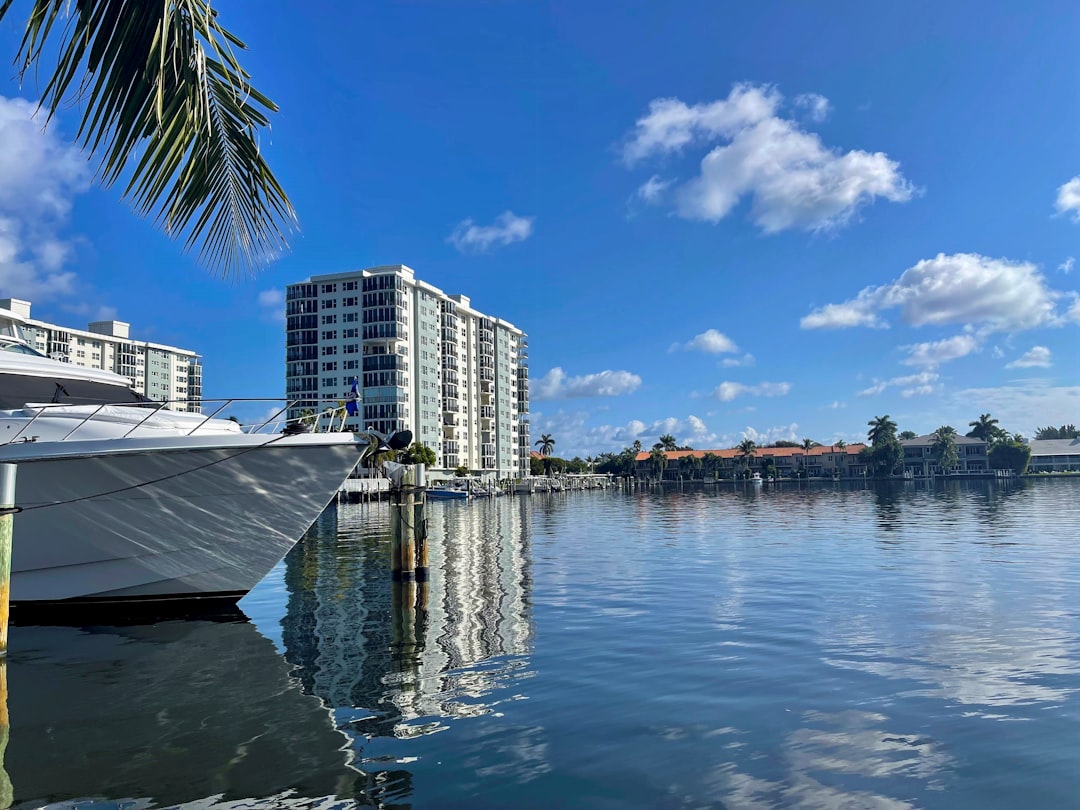
In the South Florida real estate market, buyers and brokers commonly describe a dock as “deeded” when it is conveyed as part of the recorded legal description of a single-family lot, the same way the pool or the seawall is part of the property. A deeded dock on a single-family canal lot transfers with the deed. It does not need anyone’s permission to exist for the new owner. It is simply part of what was purchased.
Condominiums and some HOA-governed waterfront communities work differently. Under Florida Statute 718.113, anything in a condominium that is not part of an individual unit is a common element. A declaration of condominium can designate a boat slip as a limited common element and assign exclusive use of it to one unit. That is a meaningfully different legal position than owning a deeded dock outright.
An assigned slip can typically be reassigned, restricted, or reconfigured by the association board under the terms of the declaration. Some associations allow slip owners to lease unused slips to other unit owners or, less often, to outside boaters. Others prohibit subleasing entirely. None of this shows up by looking at the dock itself. It shows up in the declaration of condominium, the rules governing limited common elements, and any amendments the association has passed since the building was built.
Why the Distinction Matters Before Closing
A buyer purchasing a home with a deeded dock should confirm the dock is actually described in the legal description and title commitment, not just referenced in the listing. A buyer purchasing into a community with an assigned slip should request the declaration of condominium, the current rules regarding slip use and transfer, and any board minutes discussing slip reassignment or fee changes. Title insurance covers the deeded real property interest. It does not cover the association’s right to change slip rules after closing.
Financing can also diverge. A deeded dock on a single-family lot is simply part of the collateral for a mortgage. An assigned slip in a condominium is sometimes treated separately by lenders, and a buyer relying on dock access as a condition of the purchase should raise it directly with both the lender and the closing attorney rather than assuming it is automatically included.
DEP Permits and Submerged Land Leases
Building or substantially modifying a private dock in Florida runs through the Florida Department of Environmental Protection, and most single-family residential docks qualify for an exemption rather than a full permit. Under Florida Administrative Code Rule 62-330.051, a private dock serving a single-family residence can generally be exempt from an Environmental Resource Permit when the over-water structure stays within roughly 1,000 square feet in an artificial waterbody such as a residential canal system, with a lower threshold applying inside designated Outstanding Florida Waters. Owners can self-certify the exemption at no cost through the DEP’s online Business Portal, or pay a filing fee for a formal exemption verification letter if a lender or title company wants written confirmation.
Exemption from the environmental permit is not the same as exemption from state land rights. Because the dock physically occupies state-owned submerged land, a separate authorization applies under Florida Statute 253.0347, which governs leases of sovereignty submerged lands issued by the Board of Trustees. The statute exempts most private, non-income-producing residential docks from a lease fee when the structure’s footprint over state land stays within statutory limits tied to shoreline length, generally enough room for up to four private vessels. A dock generating rental income from a slip, or one built for multi-family or commercial use, does not get that exemption and needs an active submerged land lease with the associated fee.
Two practical points matter here for a buyer. First, the Department of Environmental Protection inspects private residential docks under lease on a rotating cycle, roughly once every ten years, checking that the structure still matches what was permitted or exempted. A dock that has been rebuilt, widened, or extended without updated paperwork can create a compliance gap the new owner inherits. Second, any plan to rent out a dock or slip, even informally, changes its regulatory status from exempt residential use to income-producing use, which can trigger lease fees and permitting requirements that were never a factor for the seller.
- Confirm whether the existing dock was built under an exemption, a formal permit, or neither
- Ask for the DEP self-certification record or exemption verification letter if one exists
- Check whether any part of the dock structure was added after the original approval
- Clarify with the seller whether the dock or a slip has ever generated rental income
None of this is a reason to avoid a waterfront purchase. It is a reason to have a real estate attorney and, where warranted, a marine contractor review the dock’s permitting history before closing rather than after.
Bridge Clearance and Vessel Access
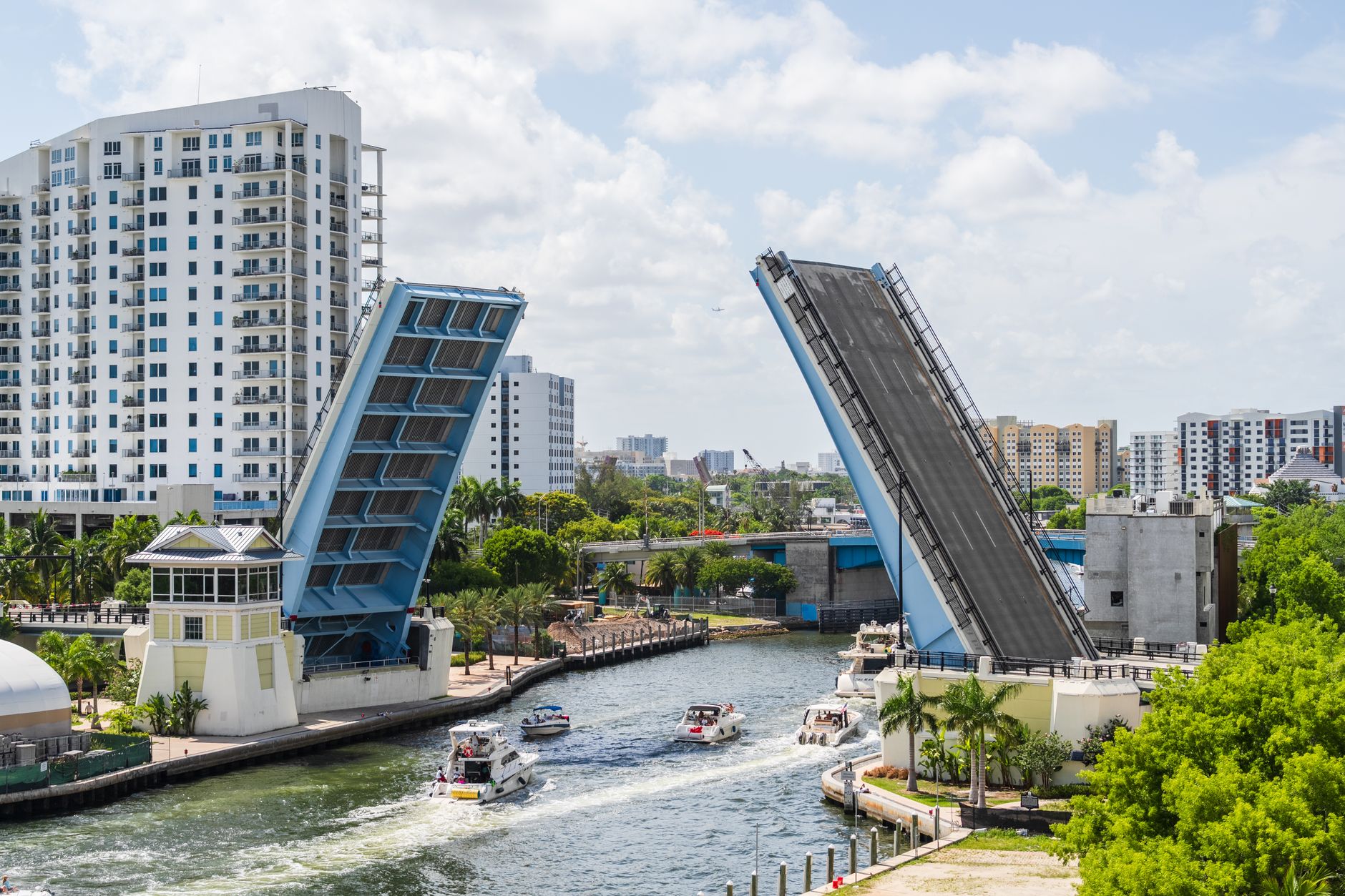
A dock is only as valuable as the boat that can reach it. This is where brokers who work South Florida’s canal systems earn their keep, because bridge clearance is not something a listing photo shows.
Fort Lauderdale’s canal network, often called the Venice of America, includes stretches of the New River and connecting canals with no fixed bridges between the property and the Intracoastal Waterway or the ocean inlet. Homes on those stretches routinely command a premium because a buyer who owns, or plans to own, a sport yacht in the 60 to 100-foot range can actually bring it home and keep it there. A nearly identical house one canal over, behind a fixed bridge with a posted air draft of 15 or 20 feet, is simply off the table for that same buyer, regardless of price. Miami-Dade and Palm Beach County waterfront markets have the same dynamic on a smaller scale wherever fixed bridges separate interior canals from open water.
Bridge clearance is only half the equation. Water depth at mean low water, not high tide, determines whether a given hull can safely sit at the dock without grounding out. A dock rated for a 4-foot draft center console is a very different asset than one that can handle a 6-foot draft motor yacht. Buyers who already own a specific vessel should have the actual draft and beam measured against the dock and the adjacent channel before assuming the boat and the house are a match.
For a buyer without a boat yet, the more useful question is the reverse: given this dock’s bridge clearance, channel depth, and slip length, what is the largest vessel this property can realistically support? That answer, more than square footage or finishes, often explains why two seemingly identical waterfront homes sell at very different prices.
Insurance and Maintenance for Private Docks

A dock is a structure exposed to salt water, storm surge, and marine growth year-round, and it needs to be underwritten and maintained accordingly. Standard homeowners insurance policies frequently sublimit or exclude dock and seawall damage, or treat it differently from damage to the primary dwelling. Buyers should ask specifically how a carrier treats dock, davit, boat lift, and seawall coverage rather than assuming it falls under the same wind and flood coverage as the house.
Seawalls deserve particular attention on any older South Florida waterfront property. A cracked, leaning, or undermined seawall can cost well into six figures to replace and is a common negotiating point in waterfront contracts. A marine contractor’s inspection, separate from the standard home inspection, is worth the cost on any property where the seawall’s age or condition is unclear.
Materials matter too. Wood dock structures generally need more frequent maintenance and have a shorter service life in saltwater than concrete or composite decking on aluminum or concrete piling systems. During Florida’s hurricane season, which runs from June through November, uncovered boat lifts and older wood docks are typically the first structures to show storm damage. Buyers closing during hurricane season should ask when the dock and seawall were last inspected and whether the current owner has hurricane preparation records, such as davit and lift service history, on file.
None of these issues are reasons to walk away from a well-located waterfront property. They are line items to budget for, the same way a buyer budgets for a new roof or a pool resurfacing, and they belong in the negotiation, not in a surprise after closing.
Working With a Brokerage That Knows the Water
Most of what determines whether a waterfront property actually works for a buyer, bridge clearance, dock ownership structure, submerged land status, seawall condition, never appears in the MLS listing. It comes from a broker who has walked the property, knows the canal, and has closed deals on that same stretch of water before.
At MJI Realty Group, our transactional specialty is South Florida waterfront: Miami-Dade, Broward, and Palm Beach. We work with buyers who need a dock that fits a specific vessel and with sellers who want their listing to reach qualified boat owners, not just house shoppers. Our market expertise sets us apart, and that includes knowing which canals run clear to the ocean and which properties carry deeded docks versus assigned slips before an offer ever goes in.
If you are evaluating a Florida waterfront purchase, or considering selling a property with private dock access, MJI Realty Group can walk the dock and the title history with you before you commit. Real estate decisions depend on individual circumstances, including the specific vessel, financing, and community governing documents involved, so this article is general information and not legal, tax, or insurance advice for your specific situation. A Florida real estate attorney and a licensed marine surveyor should review any waterfront contract before closing.