Coral Gables Holds Its Own as Miami’s Steadiest Luxury Address
A buyer touring Coral Gables this summer might spend a Tuesday morning inside a coral rock Mediterranean Revival home two blocks from the Biltmore, its barrel tile roof original to 1926, and the same afternoon on a private dock in Gables Estates, watching a 130-foot yacht idle past on its way to Biscayne Bay. Both properties carry the same ZIP code. They do not compete for the same buyer, and they do not price the same way. That split is the story of Coral Gables in 2026.
While parts of South Florida’s condo market have cooled from the pandemic-era surge, Coral Gables single-family inventory has stayed tight. Historic core homes near Granada Golf Course and the Biltmore Hotel typically trade in the $1.5 million to $2.5 million range, while waterfront estates along Old Cutler Road, in Gables Estates, and in Journey’s End push well past $10 million, with the rarest open-bay lots asking multiples of that. National Association of REALTORS® luxury market research shows this bifurcated pattern repeating across the country’s top luxury submarkets in 2026: entry-tier luxury holding steady while the ultra-prime segment, insulated by cash buyers and equity-rich sellers, keeps appreciating on its own timeline.
At MJI Realty Group, we work Coral Gables from both ends of that spread, the historic single-family buyer looking for character and walkability, and the ultra-prime waterfront client who wants a closing that never shows up in a public listing feed.
The Neighborhoods That Set Coral Gables Apart
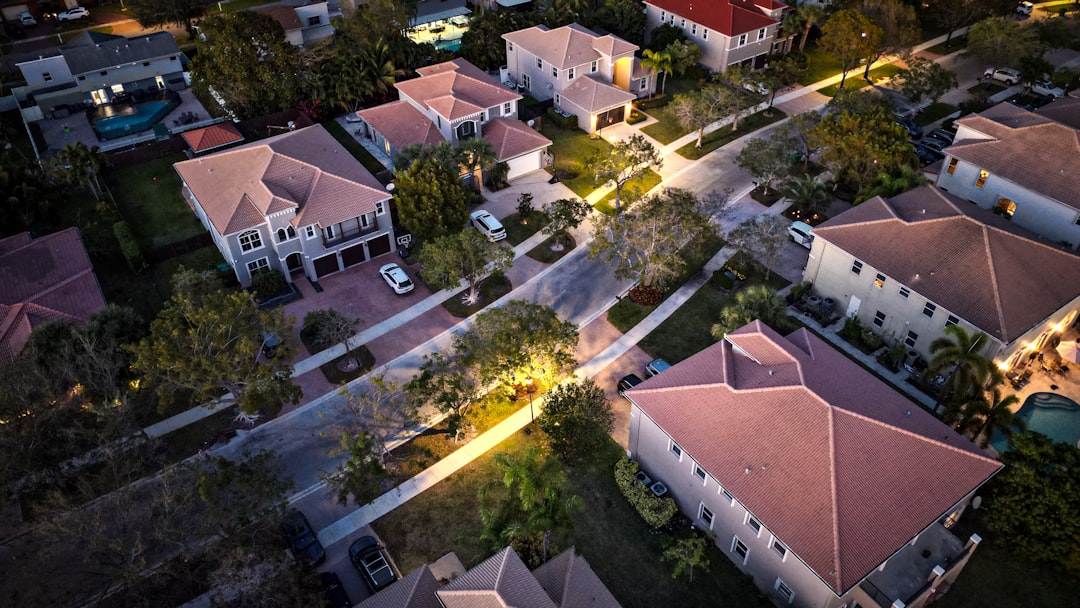
Coral Gables is not one market. It is a collection of distinct pockets, each with its own buyer profile, price band, and set of trade-offs.
Gables Estates and Old Cutler Bay
These two guard-gated communities sit at the southern edge of Coral Gables along Old Cutler Road and represent the city’s ultra-prime tier. Gables Estates holds fewer than 200 waterfront lots, many with direct, bridge-free access to Biscayne Bay, a feature that carries a real premium because it lets larger vessels come and go without tide or clearance restrictions. Old Cutler Bay is smaller and slightly less expensive, but still trades almost entirely in eight figures for redevelopment-ready lots and new construction.
Buyers in this tier are rarely comparing price per square foot the way a typical home shopper would. They are comparing dock length, water depth, protected harbor exposure, and how much privacy a lot offers from neighboring construction.
The Historic Core: Old Spanish Village to the Biltmore
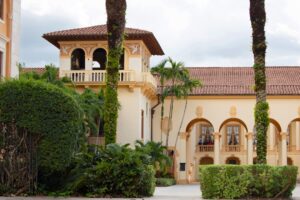
Founded by George Merrick in the 1920s, Coral Gables’ historic core is built around Mediterranean Revival architecture: coral rock facades, barrel tile roofs, archways, and courtyards. Neighborhoods like the Biltmore Section, Coral Gables Country Club Section, and the themed village districts (Chinese, French, Dutch South African) trade on character as much as square footage. These homes sit within walking distance of Miracle Mile, the Biltmore Hotel and golf course, and the University of Miami, which keeps demand steady from buyers who want walkability along with a large lot.
Cocoplum, Hammock Lakes, and Sunrise Harbour
These gated, newer-construction communities offer a middle tier between the historic core and the ultra-prime waterfront estates. Cocoplum and Hammock Lakes combine modern construction with mature landscaping and community security. Sunrise Harbour sits at a lower price point per square foot than Gables Estates but still offers protected-water access, making it a common entry point for buyers moving up from a condo into their first waterfront single-family home.
Historic Preservation Rules Buyers Cannot Skip
Coral Gables enforces one of the strictest architectural review processes in South Florida. Roof color, exterior paint palettes, fence styles, and even some landscaping choices in historic districts are subject to city design guidelines, and a portion of the city’s older housing stock carries individual historic designation or sits inside a historic district overlay. That matters for two reasons.
First, it protects the character that makes Coral Gables valuable in the first place. A buyer is not going to end up next to a structure that clashes with the neighborhood’s Mediterranean Revival identity. Second, it changes the renovation math. A buyer planning to gut-renovate or add square footage to a historic-district property needs to budget extra time for Board of Architects review and, in some cases, a Historic Preservation Officer sign-off before permits move forward. We walk every historic-district buyer through this timeline before they write an offer, because a renovation that would take four months in an unrestricted neighborhood can take considerably longer here.
None of this applies the same way in Gables Estates, Cocoplum, or the other newer gated communities, where design review is handled through the homeowners association rather than the city’s historic preservation board. Buyers should confirm which review process applies to a specific address before assuming their renovation plans are straightforward.
Waterfront Access, Flood Zones, and Insurance Reality

Nearly every waterfront property in Coral Gables sits inside a FEMA-mapped flood zone, and insurance underwriting has gotten more granular in recent years. Elevation certificates, roof age, and hurricane mitigation features (impact windows, updated roof-to-wall connections) now move premiums meaningfully, not just qualify or disqualify a policy. Buyers should pull the flood zone designation and elevation certificate for any waterfront address early in due diligence rather than after an offer is accepted; it is one of the few numbers that can change a deal’s economics after the fact. The FEMA Flood Map Service Center is the starting point for confirming a property’s designation before relying on a listing agent’s summary.
What the 2026 Numbers Actually Show
Miami-Dade County’s single-family market overall has stayed remarkably resilient through 2026, with countywide single-family median prices continuing a streak of year-over-year gains that has held in most months for more than a decade, according to Florida Realtors® market data. Coral Gables trades well above that countywide median across every segment, and the spread between its price tiers has widened rather than narrowed. Entry-tier neighborhoods and condos in the $1,200 to $1,400 per square foot range sit alongside the most exclusive open-bay lots, which have cleared $3,000 per square foot in recent closings.
Days on market tell a similar bifurcated story. Historic-core listings priced realistically for their district are moving in a matter of weeks when they are marketed correctly. Ultra-prime waterfront listings, by contrast, often sit on the market for three to four months even when priced fairly, simply because the buyer pool for a $15 million or $30 million property is small and global. That is not a sign of a soft listing. It is the nature of a market where the right buyer might be in Sao Paulo, London, or Palm Beach on any given week, and the sale closes on relationship and timing as much as price.
Miracle Mile and the Commercial Side of Coral Gables
Coral Gables is not just a residential story. Downtown, anchored by Miracle Mile and the Alhambra and Ponce de Leon corridors, remains one of Miami-Dade’s most stable office and retail submarkets, supported by the presence of international consulates, corporate regional headquarters, and the University of Miami. For investors who already own a Coral Gables residence, or who are evaluating the area purely on fundamentals, ground-floor retail along Miracle Mile and boutique office buildings in the surrounding blocks have held occupancy better than many suburban commercial corridors, largely because the walkable, mixed-use format keeps tenants in place longer than a typical strip center.
That combination, stable office and retail fundamentals sitting next to some of the region’s most tightly held residential real estate, is part of why Coral Gables draws both the owner-occupant buyer and the investor in the same conversation. A client evaluating a personal residence here is often the same client asking about a small office building near Ponce de Leon Boulevard six months later.
How the Buying Process Actually Works Here
Coral Gables luxury sales, particularly in Gables Estates and Old Cutler Bay, move differently than a typical single-family transaction. A meaningful share of the highest-value inventory never appears on public search portals; it trades through broker relationships, private showings, and off-market conversations between agents who already know which sellers are considering a move. Buyers who limit their search to public listings are seeing a fraction of what is actually available.
- Get pre-qualified or provide proof of funds before requesting a showing in Gables Estates or Old Cutler Bay; sellers and listing agents expect it at this price point.
- Budget extra due diligence time for historic-district properties, including a records search for any existing Board of Architects approvals tied to the home.
- Order a marine survey alongside a standard inspection for any property with a private dock, covering seawall condition, dock structure, and water depth at low tide.
- Confirm flood zone and elevation certificate details before finalizing a financing or insurance timeline.
On the sell side, pricing a Coral Gables luxury property without direct comparable sales is common in the upper tiers, since so few transactions occur each year in the ultra-prime bracket. That is where a broker’s direct knowledge of recent private sales, not just what is visible in the public record, becomes the difference between an accurate price and a guess.
Property Taxes and What a Purchase Price Really Costs Long Term
A Coral Gables purchase price is only part of the long-term cost picture. Every property in the city is assessed separately by the Miami-Dade County Property Appraiser, and a buyer moving from another county, or from out of state, should never assume the previous owner’s tax bill carries over. Florida resets the taxable value to the purchase price the year after a sale closes, then applies the state’s assessment caps in every year after, 3% annually for a homesteaded primary residence, 10% for non-homestead property such as a second home or investment property. On a Coral Gables home carrying eight figures of value, that difference between homestead and non-homestead treatment compounds into real money within a few years.
Buyers relocating a primary residence to Coral Gables should also confirm whether Florida’s homestead exemption and Save Our Homes portability rules apply to their situation, since portability can carry accumulated tax savings from a previous Florida homestead into the new purchase. It is a detail worth reviewing with a tax professional before closing, not after the first tax bill arrives.
Working With a Boutique Brokerage in Coral Gables
Coral Gables rewards buyers and sellers who work with someone who knows the difference between a Gables Estates dock premium and a historic district renovation timeline, because those details change the deal, not just the marketing. At MJI Realty Group, we’re a boutique brokerage devoted to buying and selling luxury real estate for our clients, and Coral Gables is a market where that kind of senior-broker attention pays off, whether the transaction is a $1.8 million historic home or an off-market waterfront estate that will never see a public listing.
If you’re considering a purchase or sale in Coral Gables, or comparing it against other South Florida luxury submarkets, MJI Realty Group works with buyers and sellers who value discretion, market knowledge, and a process that moves at the right pace for the property. Real estate decisions depend on individual circumstances, including financing, tax position, and timeline; this article is general information, not legal, tax, or investment advice for your specific situation.