The Financial Case for Moving to Florida

High earners relocating from New York, New Jersey, California, or Illinois typically frame the Florida move as a lifestyle decision. The numbers make it a financial one. A household earning $2 million annually saves an estimated $130,000 or more per year by establishing Florida residency compared to California or New York rates. Over a decade, with investment returns compounding on that retained capital, the cumulative advantage reaches well into seven figures.
Florida captured $39.2 billion in net adjusted gross income from interstate moves as of early 2026, more than any other state. That inflow is driven primarily by high-income households departing the Northeast and West Coast. The concentration in South Florida, particularly Palm Beach, Miami-Dade, and Broward counties, has reshaped those markets significantly over the past ten years and shows no structural sign of reversing.
The tax structure is the primary engine. Florida has no state income tax, no estate tax, no inheritance tax, and no state-level tax on retirement income or capital gains. The state’s revenue comes from sales taxes, documentary stamp taxes, and property taxes, none of which scales sharply with income. For high earners who have spent their careers in states with graduated income tax rates from 10% to 13.3%, the shift to zero changes the math on every financial decision that follows. But Florida residency is a legal process, not a change of mailing address. Getting the domicile right matters as much as understanding the savings.
No State Income Tax: What Zero Actually Means

Florida’s constitution prohibits a personal income tax, and that prohibition has been in place since 1924. Unlike some states that market themselves as no-income-tax while still taxing dividends or interest, Florida taxes none of it. Wages, business income, capital gains, dividends, interest, rental income, retirement distributions, and trust income are all exempt from state income tax.
For context: California’s top marginal rate is 13.3%. The combined New York state and city rate reaches 14.8% for high earners living in New York City. New Jersey’s top rate is 10.75%. Illinois charges a flat 4.95%. A founder or executive earning $3 million annually in California pays over $400,000 per year in state and local income taxes. Florida reduces that number to zero.
This is not a loophole or a temporary policy. It is constitutional. Florida legislators would need to pass a constitutional amendment, requiring a 60% supermajority vote, to impose an income tax. That structural barrier has remained in place for over a century.
Federal income tax is unchanged by state residency. Florida doesn’t reduce IRS obligations. But eliminating state income tax changes the planning framework around when to recognize income, when to sell appreciated assets, and how to structure distributions from business entities and retirement accounts. For high earners, that planning flexibility adds value well beyond the direct tax savings figure alone.
No Estate or Inheritance Tax: The Generational Advantage

Florida has no state estate tax and no state inheritance tax. The federal estate tax still applies above the federal exemption threshold, which stands at $13.61 million per individual as of 2026. But Florida imposes nothing on top of the federal layer.
This matters significantly for households engaged in multigenerational wealth planning. States like Massachusetts and Oregon impose estate taxes beginning at $1 million in estate value. Connecticut’s top estate tax rate is 12%. New York reaches 16% on amounts above the exemption and applies a notorious “cliff” provision that can effectively subject the entire estate to the top rate once assets exceed 105% of the exemption. Establishing Florida domicile eliminates these state-level estate charges entirely for Florida-domiciled assets.
Trusts, LLCs, and other holding structures still require careful legal and tax planning. But the baseline advantage is substantial. A $50 million estate that would face $5 million or more in state estate taxes under New York law faces zero state estate tax in Florida. For families building wealth intended to transfer across generations, that gap justifies serious attention to the domicile question long before any estate planning event approaches.
Florida also has no gift tax at the state level. Intra-family transfers and gifting strategies designed to reduce future estate value aren’t subject to a Florida-specific charge. Federal gift tax rules still apply, but the state layer is absent.
Florida Property Taxes for High-Value Owners
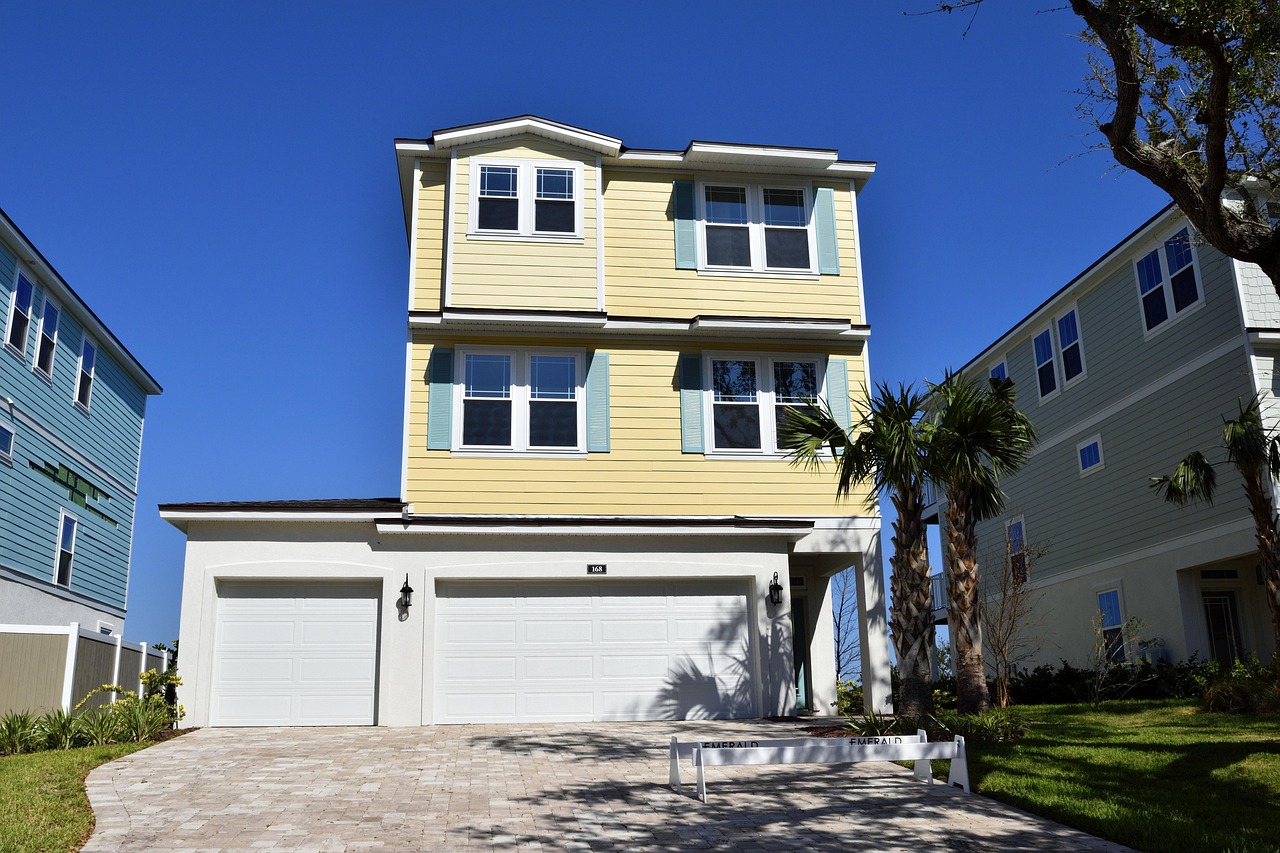
Florida property taxes are assessed at the county level and vary by location and taxing authority. For luxury properties in Miami-Dade or Palm Beach County, effective rates typically fall between 1.1% and 1.7% of market value. On a $5 million estate, annual property taxes run approximately $55,000 to $85,000 before exemptions. That is a real cost, but two features of Florida’s system make the long-term picture considerably more favorable for buyers who stay.
The Florida homestead exemption reduces the assessed value of a primary residence by $50,000, with the first $25,000 applying to all taxing authorities, including school district levies, and the second $25,000, covering assessed value between $50,000 and $75,000, excluding school taxes. For a luxury home valued at $5 million or more, the dollar savings from the exemption itself are modest. The Save Our Homes cap is where the real benefit accumulates over time.
Save Our Homes limits annual increases in the assessed value of a homesteaded property to 3% or the rate of CPI inflation, whichever is lower. In 2026, that cap is 2.7%, as confirmed by the Florida Department of Revenue. On a property purchased in 2016 and held through 2026, the assessed value can be well below current market value, producing annual tax savings that compound with each passing year. For long-term owners of high-value Florida properties, this divergence between assessed and market value is one of the most significant financial features of Florida ownership, rewarding buyers who stay rather than those who sell and move frequently.
Establishing Florida Domicile: The Legal Standard

Florida residency means more than owning a property in the state. To establish Florida as your legal domicile and claim the associated tax benefits, you need to meet a standard that holds up under scrutiny from a prior-state tax authority. High-income taxpayers departing New York, California, or New Jersey face a high probability of a residency audit targeted specifically at their departure year.
New York aggressively audits departing high earners. A New York “statutory resident” is someone who maintains a permanent place of abode in New York and spends more than 183 days per year in the state. If both conditions are met, the taxpayer remains subject to New York income tax even with a Florida domicile established. California applies similar logic. Establishing Florida domicile requires a coordinated set of concrete actions:
- Declaration of Domicile: File at your county circuit court clerk’s office. This is the formal legal declaration of intent to make Florida your primary legal home.
- Florida Driver’s License: Replace your prior-state license promptly after establishing Florida residence.
- Florida Voter Registration: Register to vote in Florida and cancel your prior-state registration.
- Vehicle Registration: Register your primary vehicles in Florida.
- Update Professional and Financial Records: Notify your bank, brokerage accounts, attorney, CPA, and medical providers of your Florida address.
- Day Count Documentation: Maintain a daily log of your physical location. This becomes your primary evidence in a residency audit.
- Reduce Footprint in the Prior State: Resign from clubs, relocate personal property and valuables to Florida, and reduce the character of your prior-state property.
Domicile is a question of intent, supported by evidence. Building that evidence from day one of your Florida residency is far easier than reconstructing it years later during an audit.
What Prior States Look For in a Residency Audit

New York, California, and New Jersey each maintain dedicated audit units focused on high-income taxpayers who have claimed to relocate. These auditors look for patterns suggesting the taxpayer’s primary life remains in the prior state even after a purported move to Florida.
Common audit triggers include: maintaining a large primary residence in the prior state while the Florida home is smaller or less personally significant; continuing to use the same doctors, attorneys, and accountants exclusively in the prior state; attending the same clubs, houses of worship, and social events in the prior state on a regular basis; and keeping business activity and professional relationships anchored in the prior state rather than Florida.
For business owners, the audit often examines where board meetings occur, where management decisions are made, and where executive functions are exercised. A New York business owner who moves to Florida but continues running daily operations from a New York office, commuting back each week, faces a difficult argument that Florida is truly their primary domicile.
The IRS uses different standards from state tax authorities, focusing on income nexus and specific statutory tests rather than domicile per se. A qualified tax attorney experienced in interstate domicile matters should be part of your advisory team before and during the transition, not brought in after an audit notice arrives.
South Florida as a Long-Term Financial Base

The concentration of wealth that has flowed into South Florida over the past decade has created a private wealth infrastructure comparable to New York or Los Angeles. Family offices, private banking, estate planning firms, and high-level legal and accounting practices have followed their clients south. Palm Beach now hosts a density of financial and legal professionals serving ultra-high-net-worth clients that would have seemed implausible fifteen years ago.
Florida’s absence of a state capital gains tax means that sales of appreciated securities, real estate, or business interests trigger only the federal rate. For founders, business owners, and investors planning a significant liquidity event, timing that event after establishing Florida domicile is a planning opportunity worth addressing well in advance with a qualified advisor. The difference between closing a transaction as a California resident versus a Florida resident can be 13.3% of the gain at the state level.
According to research compiled by Florida Realtors, Florida continues to lead the nation in net migration of high-income households. Palm Beach’s South End, Miami’s Coconut Grove and Coral Gables, and Boca Raton’s estate neighborhoods have absorbed much of that demand, producing a high-end market with consistent buyer depth and limited supply at the top tier. For buyers entering at $3 million and above, Florida is not simply a tax-advantaged address. It is a real estate market with genuine appreciation history and a buyer pool that continues to grow.
Making the Transition to South Florida

Relocating at the high end of the market involves more moving parts than a standard residential purchase. The tax planning, the domicile documentation, the property search, and the transition of professional relationships need to move in a coordinated sequence. Compressing any of those steps creates risk, either in the residency documentation or in the property acquisition itself.
At MJI Realty Group, we work regularly with buyers relocating from New York, New Jersey, California, and other high-tax states. We understand that the property search is one piece of a larger transition, and we work with clients’ existing advisors to structure the timeline appropriately. South Florida’s luxury market moves faster than most relocating buyers expect. Properties with the right specifications sell quickly, often through quiet transactions that never hit the public market. Starting the conversation early gives you the best position to move when the right property appears.
Real estate decisions depend on individual circumstances. This article is general information about Florida’s tax structure and is not legal, tax, or financial advice for your specific situation. Consult a licensed Florida tax attorney and a CPA experienced in interstate domicile transitions before making any relocation decisions based on this information.