When the Seller, Not the Buyer, Is From Overseas
South Florida’s international buyer story gets most of the attention. Miami-Dade, Broward, and Palm Beach routinely rank among the top destinations in the country for foreign purchasers, and Florida Realtors’ international transaction data shows Latin American and Canadian buyers driving billions of dollars in South Florida closings every year.
What gets less attention is the other side of that same trade. Every one of those foreign buyers eventually becomes a foreign seller, whether that happens in three years or thirty. When a non-U.S. person sells U.S. real property, a federal law called the Foreign Investment in Real Property Tax Act steps into the transaction and changes who owes what, and when.
FIRPTA does not tax the sale itself. It forces the buyer to withhold a portion of the sale price at closing and send it to the IRS on the seller’s behalf, as a deposit against whatever capital gains tax the seller ultimately owes. For a $3 million Fort Lauderdale waterfront estate, that can mean $450,000 held back at the closing table, money the seller does not see again until a return is filed and processed. Sellers who have not planned for it are often caught off guard by how much of their proceeds get diverted before reaching a bank account.
Domestic sellers never encounter this mechanism. A Florida resident selling a Weston single-family home or a Delray Beach townhouse settles up with the IRS the following tax season, the same as any other sale of appreciated property. A foreign owner selling the identical property loses access to a chunk of the proceeds on closing day itself, months before any tax return gets filed. That timing gap is the part that trips up sellers who assume a real estate closing works the same way regardless of citizenship or residency status.
The rest of this guide walks through how the withholding is calculated, when it can be reduced or eliminated, and what a foreign owner selling in Miami-Dade, Broward, or Palm Beach should have lined up before a contract is even signed.
How FIRPTA Withholding Actually Works

FIRPTA applies whenever the seller of U.S. real property is a foreign person for tax purposes, meaning a nonresident alien individual, a foreign corporation, or a foreign partnership, trust, or estate. The IRS FIRPTA withholding rules place the withholding obligation on the buyer, not the seller. If the buyer fails to withhold and remit the correct amount, the IRS can pursue the buyer directly for the shortfall plus interest and penalties. That is why closing attorneys and title companies across Miami-Dade and Broward treat FIRPTA compliance as a required step, not an optional one, in any transaction involving a foreign seller.
The standard withholding rate is 15% of the total sale price, not 15% of the seller’s profit. That distinction catches people off guard. A seller who bought a Boca Raton condo for $900,000 and sells it for $1.2 million might have a modest taxable gain, but withholding is calculated on the full $1.2 million unless a reduced rate or exemption applies.
Determining foreign status is not always obvious. A green card holder is treated as a U.S. person for FIRPTA purposes even if they spend most of the year abroad, while a seller on a long-term visa without a green card generally is not. A single-member LLC owned by a foreign individual is typically disregarded for federal tax purposes, meaning the withholding rules look through the LLC to the foreign owner behind it. Sellers who hold Florida property through a foreign trust or an offshore corporation should confirm the entity’s classification with a U.S. tax professional well before listing, since the wrong assumption here can mean the wrong withholding amount gets applied at closing.
The Withholding Rate Depends on Price and Buyer Intent
The 15% rate is not universal. The IRS exceptions to FIRPTA withholding lay out a tiered structure that depends on the sale price and what the buyer plans to do with the property.
The reduced rate and the full exemption only apply when the buyer is an individual who intends to use the property as a personal residence, defined as occupying it at least half the time the property is used during each of the first two years after closing. A foreign seller unloading a Palm Beach investment condo to an LLC, a trust, or a buyer who plans to rent it out does not get the benefit of either break. The full 15% applies regardless of price.
Reducing Withholding With an IRS Certificate
A foreign seller who expects the withholding to significantly overshoot the actual tax owed does not have to wait for a refund after filing a return. Form 8288-B lets the seller, or the buyer, apply directly to the IRS for a withholding certificate that authorizes a reduced amount based on the seller’s actual computed gain rather than the gross sale price. This matters most for sellers who have owned a property for many years and have substantial closing costs, capital improvements, or a smaller gain than the sale price would suggest.
Consider a seller who bought a Palm Beach condo for $2.1 million a decade ago and sells it today for $2.6 million. Standard withholding at 15% of the gross price would hold back $390,000, even though the actual taxable gain and resulting tax liability is far smaller once selling costs and basis adjustments are factored in. A withholding certificate lets that seller present the real numbers to the IRS ahead of closing and get the withholding scaled down to match the actual liability, rather than the flat percentage of the full sale price.
The application has to be filed before or at closing, and the standard processing window runs around 90 days, though the IRS can take longer during peak filing season. Closing attorneys typically structure the transaction so the withheld funds sit in an escrow account rather than going straight to the IRS while the certificate request is pending. That keeps the seller from waiting on a government refund process to recover money that was never actually owed in the first place, and it is one more reason sellers should raise the FIRPTA question with their broker and closing attorney at listing, not at contract signing.
Why This Comes Up Constantly in South Florida
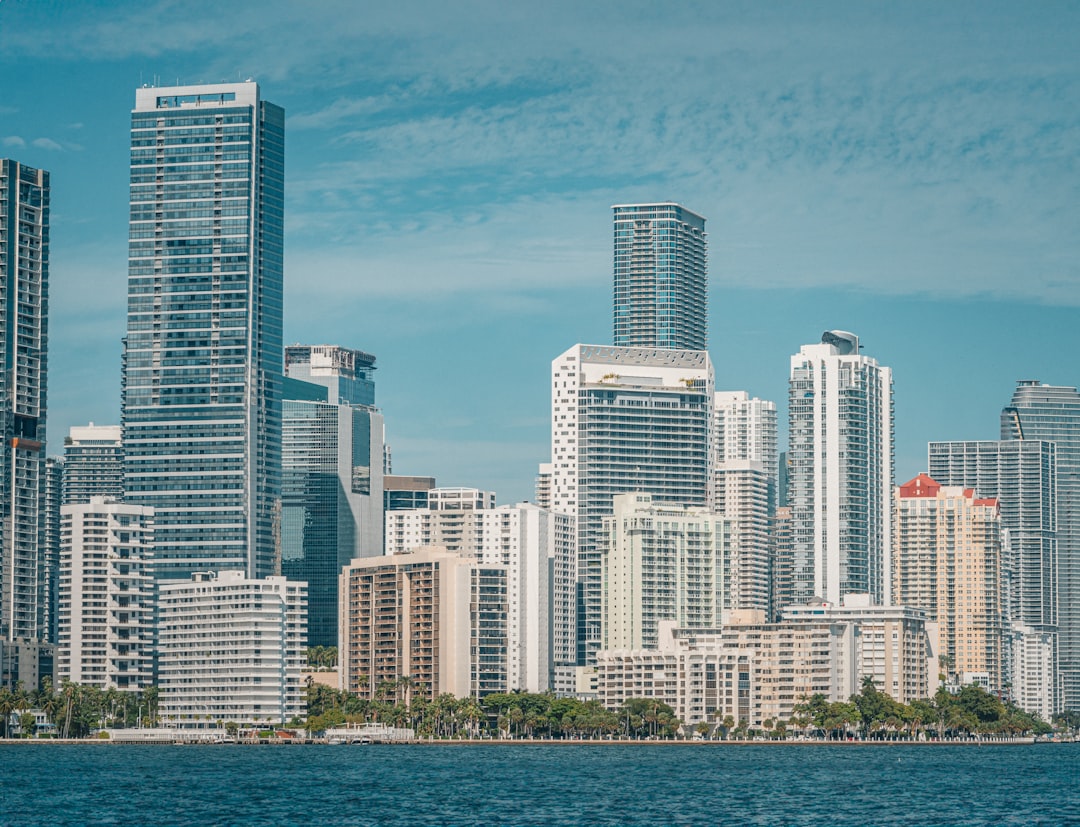
Florida has been the top state for foreign home buyers for years, and Miami is consistently ranked among the busiest U.S. markets for international purchasers. About 45% of all international residential transactions in Florida close in the Miami, Fort Lauderdale, and West Palm Beach metro area, and Colombia and Argentina alone account for roughly a quarter of South Florida’s international closed sales, with Canadian buyers close behind. International buyer dollar volume in Florida climbed back above $10 billion in 2025 as sale prices and transaction counts both rose.
That volume of foreign purchasing over the past two decades means a large share of South Florida’s waterfront estates, high-rise condos, and premium commercial properties are currently held by non-U.S. owners. Every one of those owners will eventually sell, and FIRPTA will apply to that sale regardless of how long they have lived in the property or how familiar they are with U.S. tax law. Brokers who work regularly with international clients build the withholding conversation into the listing process from day one, not at the closing table when it is too late to plan around it.
The commercial side carries the same exposure. A foreign-owned warehouse in Doral, a retail strip in Hialeah, or a multifamily building in Fort Lauderdale is subject to the identical withholding mechanism when it sells, and because commercial and multifamily assets rarely qualify for the personal-residence exemption, the full 15% rate applies to nearly every one of those transactions. Investors who built a Florida commercial portfolio from overseas capital over the past decade should assume FIRPTA withholding is a fixed cost of eventually exiting that position, and plan financing and reinvestment timelines around it accordingly.
FIRPTA at the Closing Table
In practice, the title company or closing attorney calculates the withholding amount, confirms the seller’s foreign status through a certification, and remits the funds to the IRS using Form 8288 within 20 days of closing. The seller’s net proceeds on the settlement statement reflect the withholding as a line item, separate from other Florida-specific closing costs like the documentary stamp tax the Florida Department of Revenue charges on the deed transfer.
Coordinating all of this correctly requires the closing team to know about the seller’s foreign status well before the closing date, not the week of. A title company that finds out at the last minute has little room to help a seller pursue a withholding certificate, and a rushed closing under the standard 15% rate can tie up a meaningful share of the seller’s proceeds for months longer than necessary.
FIRPTA also interacts with other parts of a Florida closing in ways that surprise sellers who have only sold property in their home country. Title insurance, prorated property taxes, and any outstanding condo association assessments still get resolved through the normal settlement process, but the withheld FIRPTA funds are separate from and unavailable to cover any of those figures. A seller who structures a sale as part of a 1031-style exchange should also confirm how that strategy interacts with FIRPTA well in advance, since the exchange rules and the withholding rules are governed by different sections of the tax code and do not automatically align without specific planning.
Reconciling the Withholding on a U.S. Tax Return
Withholding is not the final word on what a foreign seller owes. It is a prepayment, and the actual liability gets settled on a U.S. nonresident tax return filed after the sale, generally Form 1040-NR for an individual seller. If the withheld amount exceeds the real capital gains tax owed, which happens often given that withholding is based on gross price rather than net gain, the difference comes back to the seller as a refund once the return is processed.
Filing that return requires an individual taxpayer identification number, which foreign sellers without a Social Security number need to apply for through the IRS if they have not already obtained one. Sellers who wait until after closing to start that process add months to an already slow refund timeline. The more efficient sequence is to secure the taxpayer ID and line up a U.S.-based tax preparer familiar with nonresident returns before the property ever goes under contract, so the reconciliation return can be filed as soon as the following tax season opens rather than scrambling after the fact.
Sellers should also budget for the reality that this refund, when one is due, typically will not arrive for many months after closing. Cash flow planning for a subsequent purchase, a reinvestment, or simply the sale proceeds a seller was counting on should assume the withheld amount is unavailable for a meaningful stretch of time, not treat it as money that will reappear on a predictable schedule.
Mistakes Foreign Sellers Make
The same handful of issues show up again and again in South Florida closings involving foreign sellers.
- Assuming the withholding is the final tax bill, rather than a deposit against whatever is actually owed once a return is filed, and pricing a next purchase around the full gross proceeds instead of the net amount actually available at closing
- Waiting until the week of closing to start a Form 8288-B application, when the roughly 90-day processing window makes that timeline unworkable and forces the seller into the standard rate by default
- Structuring the sale through a foreign corporation or trust without checking how that changes the withholding calculation and reporting obligations compared to selling as an individual
- Not obtaining a U.S. taxpayer identification number early enough to file the return that ultimately reconciles the withholding against the real tax due, which delays any refund by months
- Skipping a qualified U.S. tax professional and relying on advice from a home-country accountant unfamiliar with FIRPTA, U.S. capital gains rules, or nonresident filing requirements
- Assuming a co-owned property, such as a home held by a foreign spouse and a U.S. citizen spouse, is automatically exempt, when in practice the withholding is often calculated proportionally against the foreign owner’s share
Each of these is avoidable with early planning, ideally at the time a foreign owner first lists a property rather than after an offer is already in hand.
Working Through FIRPTA With the Right Team
FIRPTA is a federal tax mechanism, not a real estate negotiation point, but it shapes the transaction in ways that affect price expectations, closing timelines, and how much cash a seller actually walks away with. A seller who understands the tiers, applies for a withholding certificate when it makes sense, and lines up a qualified tax preparer before listing avoids the surprise of watching a large share of proceeds disappear into escrow for months.
At MJI Realty Group, we work with international owners across Miami-Dade, Broward, and Palm Beach who are selling estates, waterfront properties, and premium commercial holdings, and we coordinate early with closing attorneys and tax professionals so FIRPTA is planned for rather than discovered at the closing table. Real estate decisions depend on individual circumstances, and this is general information, not legal, tax, or investment advice for your specific situation. Foreign sellers should work with a qualified U.S. tax attorney or CPA before listing a property to understand exactly how FIRPTA will apply to their sale.