Florida Short-Term Rentals: The Market and the Rules

Florida attracted more than 140 million visitors in 2024, making it the most visited state in the country. Short-term rental platforms processed billions in transactions across Miami Beach, the Florida Keys, Greater Orlando, and every coastal corridor in between. Investors have followed that demand aggressively, and many have built productive rental businesses. Some have not, because they bought first and researched compliance second.
Florida’s short-term rental regulatory structure operates on three overlapping levels: state law, county and municipal ordinances, and private restrictions from homeowners associations and condominium bylaws. State law sets a preemption framework that limits what cities can do, but with a significant exception for municipalities that enacted rules before 2011. Tax obligations come from both the state and the county. Private association restrictions sit entirely outside the preemption structure, which means an HOA can prohibit short-term rentals regardless of what the city or the state allows.
What this means for investors: the question is not whether Florida broadly allows short-term rentals. It does. The question is whether the specific parcel you are buying, in its specific jurisdiction, with its specific homeowners association, supports the rental model you intend to run. That research happens before you sign a contract, not after.
How Florida Defines a Short-Term Rental
Florida law defines a vacation rental as any unit or group of units in a condominium or cooperative, or any single-family, two-family, three-family, or four-family dwelling, that is rented more than three times in a calendar year for periods of less than 30 days or 30 nights. This definition comes from Chapter 509 of the Florida Statutes, which covers public lodging establishments and places properties meeting this threshold under the regulatory authority of the Florida Department of Business and Professional Regulation.
The frequency threshold matters. A property rented three or fewer times per year for periods under 30 days does not trigger DBPR licensing requirements. Most investors running genuine short-term rental businesses easily exceed that threshold, so in practice, if you are buying a property to list on Airbnb, Vrbo, or any booking platform, the DBPR requirements apply from day one.
Properties rented on long-term leases of 30 days or more fall outside this framework. Some investors specifically target the 30-plus-day market to avoid the licensing and tax complications of short-term rentals. That is a legitimate model, though it trades the higher per-night rates of short-term rentals for more predictable, longer-term income. The trade-off is real and worth modeling before you commit to either strategy.
DBPR Licensing: Required Before You List

Any Florida property meeting the short-term rental definition requires a vacation rental license from the Florida Department of Business and Professional Regulation before you list it on any platform or accept a single booking. Operating without a license exposes you to fines and potential suspension of your ability to operate legally.
Most investors buying single-family homes, condos, duplexes, or small multifamily units need a Vacation Rental Dwelling license. For a single unit, the annual cost is $230, broken down as a $170 license fee, a $50 application fee, and a $10 Hospitality Education Program fee. A half-year license runs $150. If you own multiple units at different property addresses, each property needs its own license. Buildings with two to 25 units at a single address have a combined fee structure that reduces the per-unit cost somewhat.
The application is submitted through myfloridalicense.com and is typically processed within one to two business days. DBPR does not require an on-site inspection before issuing a license, but the property must meet minimum safety standards, including working smoke detectors, proper egress, and compliance with Florida building codes. Complaint-based inspections can occur after the license is issued.
One requirement that surprises many investors: if your rental property has exterior balconies or exterior stairs that are not common elements of a condominium, you must file a Certificate of Balcony Inspection with DBPR every three years. A licensed inspector must verify that the balcony and stair structures are sound. Condo owners whose balconies are classified as common elements maintained by the association are exempt from this filing requirement, but confirming that status in writing with the association before closing is worth the extra step.
The State Preemption Framework: What Cities Can and Cannot Do
Florida Statute 509.032(7)(b) prevents local governments from banning vacation rentals outright or imposing restrictions on how often or how long guests can stay. The law explicitly states that a local ordinance may not prohibit vacation rentals or regulate the duration or frequency of rentals. For investors, this means a city or county that passes a new ordinance banning short-term rentals in residential neighborhoods would not survive a legal challenge under current state law.
The critical exception is the 2011 grandfathering provision. Any local ordinance enacted on or before June 1, 2011 is exempt from preemption. Those older ordinances remain in full effect and are not overridden by state law. This is not a technical footnote. It eliminates short-term rental investing entirely in several of Florida’s most desirable markets.
Miami Beach is the highest-profile example. The city operates under pre-2011 ordinances that restrict short-term rentals in most residential zoning districts. Stays of less than six months and one day are prohibited in residential areas subject to those ordinances. Miami Beach does permit short-term rentals in certain commercial and mixed-use zones, but investors targeting residential condos or single-family homes in the city will encounter a direct prohibition that the state preemption law does not override.
What preemption does not prevent is also significant. Cities and counties retain full authority to require local registration and charge registration fees, enforce noise ordinances with specific decibel limits and quiet hours, regulate parking through rules on the number of vehicles per rental unit, impose occupancy limits tied to square footage or bedroom count, and apply local standards on trash and waste disposal schedules. Municipalities across Florida use these tools actively. Fort Lauderdale, for example, requires vacation rental operators to register locally in addition to holding a DBPR license and enforces occupancy limits based on bedroom count.
Senate Bill 280, which would have created a statewide short-term rental registration system and expanded the preemption framework further, was vetoed in June 2024 and did not take effect. The current preemption structure, with the June 2011 grandfathering exception intact, continues into 2026 unchanged.
South Florida STR Rules: Miami, Fort Lauderdale, and Palm Beach
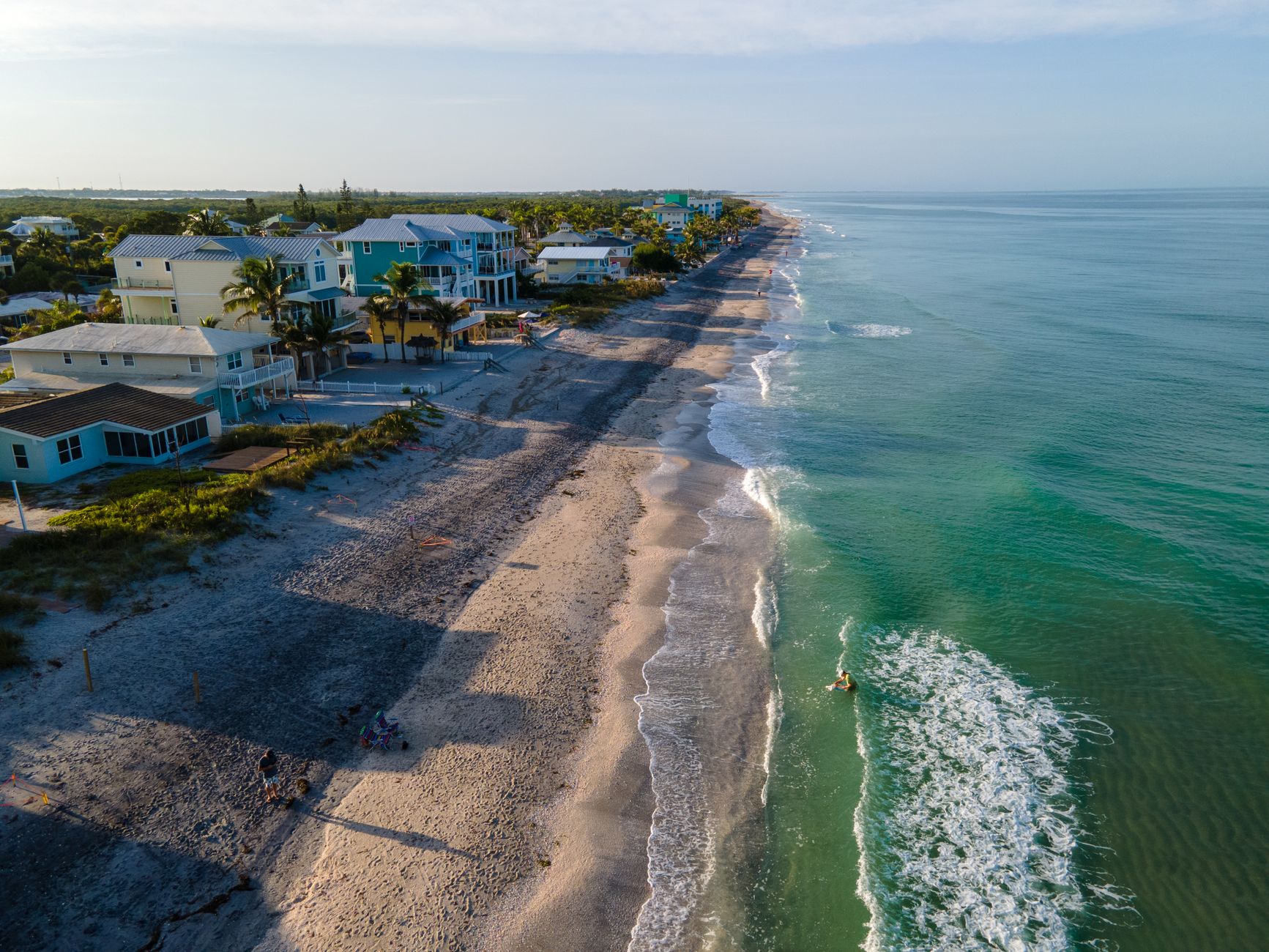
South Florida’s three-county market presents distinct regulatory environments, and within each county, city-level rules vary further. Investors who evaluate a target property at the county level only are doing incomplete due diligence.
Miami-Dade County: The county itself does not prohibit short-term rentals, but the City of Miami Beach’s pre-2011 ordinance is the most restrictive rule in the region and eliminates most residential STR opportunities in that city. Outside Miami Beach, the City of Miami has its own registration requirements and occupancy standards. Some Miami neighborhoods carry covenant restrictions that apply independently of city zoning. Miami-Dade’s unincorporated areas operate under standard county rules, which allow short-term rentals with DBPR licensing and county tax registration in place.
Broward County: Broward does not have a county-wide ban, and cities including Fort Lauderdale, Hollywood, and Deerfield Beach permit short-term rentals with local registration. Fort Lauderdale requires operators to register with the city, display the registration number on all listings, and meet occupancy rules tied to bedroom count. The city also enforces noise and parking rules that carry real enforcement teeth.
Palm Beach County: Palm Beach County permits vacation rentals in its unincorporated areas under standard state rules. The Town of Palm Beach has additional restrictions on where and how short-term rentals can operate within town limits. West Palm Beach and Boca Raton permit short-term rentals with local registration and DBPR licensing. Investors targeting the island properties or ultra-high-end Palm Beach market should verify the specific property address against the Town of Palm Beach’s zoning ordinances directly, not just the county’s general rules.
The takeaway for South Florida investors: county-level permissions do not guarantee city-level permissions. Research must go to the specific municipality and the specific address, not just the county name on the listing.
Tax Obligations for Florida Short-Term Rental Investors

Every Florida short-term rental transaction generates tax obligations at both the state and county level. Investors who do not account for these in their pro formas underestimate their effective cost structure before the first guest checks in.
At the state level, the Florida Department of Revenue imposes a 6% sales tax on all transient rental income, defined as rentals of six months or less. This applies to every booking regardless of platform. On top of the state sales tax, investors owe a county Tourist Development Tax, which ranges from 2% to 6% depending on the county. Key South Florida rates for 2026:
- Miami-Dade County: 6% TDT in most of the county; 7% in the City of Miami Beach; 4% in Surfside and Bal Harbour
- Broward County: 6% TDT
- Palm Beach County: 6% TDT
- Collier County (Naples area): 5% TDT
- Sarasota County: 5% TDT
Combined state sales tax and county TDT puts most South Florida investors at a 12% total tax rate on every booking. Miami Beach investors face a 13% combined rate. These taxes are collected from guests on top of the nightly rate, but you remain legally responsible for remitting them on time. Platforms like Airbnb and Vrbo collect and remit state and county taxes on your behalf in most Florida counties, which simplifies compliance for platform bookings. Direct bookings require you to handle collection and remittance yourself.
Federal income tax also applies to net rental income. If you use the property personally as well as renting it, the IRS applies mixed-use rules under IRS Publication 527 that determine how much of your expenses are deductible. Investors who rent their property for more than 14 days per year cannot exclude rental income under the Section 280A safe harbor and must report it as rental income on Schedule E. The distinction between active rental activity and passive activity also affects how losses are treated, which is worth discussing with a tax professional before you finalize your structure.
HOA and Condo Association Restrictions
The layer of regulation most likely to derail a short-term rental investment has nothing to do with the city, the county, or the state. Homeowners associations and condominium associations can prohibit short-term rentals in their governing documents, and Florida’s preemption law does not apply to these private restrictions. An HOA or condo association that bans rentals under 30 days can enforce that ban regardless of what local ordinances or state law allows.
Condo associations in Florida operate under the Florida Condominium Act, and the reserve fund requirements enacted in 2022 following the Surfside collapse have made Florida condo associations more financially scrutinized than at any prior point. Some associations have responded to the financial and insurance pressures from those requirements by restricting rental activity further, reasoning that short-term renters represent an elevated liability and management burden for the building.
Before purchasing any property for short-term rental use, obtain and read the full set of governing documents: the Declaration of Covenants, Conditions, and Restrictions, the condominium declaration if applicable, the bylaws, and any rules the board has adopted independently. Restrictions on rental duration and frequency are common. Some associations prohibit all rentals under 30 days. Others go further, setting 90-day minimums. Some allow short-term rentals but require advance board approval or limit the total number of rental days per year to a number that makes a genuine STR business impractical.
Listing agents and sellers do not always volunteer this information. You must request the governing documents and read them, or have a real estate attorney review them, before signing a contract with any short-term rental intent. This step is not optional and cannot be skipped to save time in a competitive offer situation.
Pre-Purchase Due Diligence: A Checklist for STR Investors

Florida’s short-term rental market is real and profitable in the right locations. The investors who succeed consistently are the ones who verify every regulatory layer before closing, not after. Work through this checklist before signing any purchase contract for a property intended for vacation rental use:
- DBPR licensing eligibility: Confirm the property type qualifies for a vacation rental license. Single-family homes, condos, duplexes, triplexes, and fourplexes qualify in most cases. Multi-unit buildings above four units fall under a different licensing category.
- Municipal STR status: Verify whether the specific city or municipality enacted a pre-June 1, 2011 ordinance that restricts rental duration or frequency. City of Miami Beach is the highest-profile case, but other municipalities have grandfathered restrictions as well.
- Local registration requirements: Check whether the city or county requires local registration in addition to the DBPR license. Fort Lauderdale, Hollywood, and other municipalities require it. Registration is separate from licensing and often carries its own fee and inspection.
- County tax registration: Register with both the Florida Department of Revenue for state sales tax and your county’s Tax Collector for Tourist Development Tax. These are separate registrations with separate filing obligations.
- HOA and condo governing documents: Read the Declaration of Covenants, Conditions, and Restrictions, the condominium declaration, the bylaws, and all board-adopted rules for rental duration minimums, approval requirements, and rental frequency caps.
- Insurance review: Standard homeowners insurance policies do not cover short-term rental commercial activity. Confirm your carrier offers an endorsement or a separate policy for vacation rental operations before your first listing goes live.
- Balcony inspection obligation: If the property has exterior balconies or stairs that are not common elements, budget for the triennial DBPR Certificate of Balcony Inspection and factor inspection costs into your ongoing operating expenses.
Working through this list before contract signing takes a few days. Discovering a disqualifying restriction after closing takes much longer to resolve, if it can be resolved at all.
Choosing the Right Property and the Right Broker
Florida’s short-term rental market rewards investors who understand the regulatory structure before they buy. The properties that perform best are not always the ones with the highest list price or the most recently renovated kitchens. They are the ones in jurisdictions that permit the rental model the investor intends to run, in buildings or communities that allow it, with license-ready configurations, and with the kind of location that drives strong occupancy.
The due diligence process for a short-term rental acquisition is meaningfully different from a primary residence purchase. You are not just evaluating the property. You are evaluating the legal and regulatory environment it sits inside. A beachfront condo in Miami Beach that looks like a strong STR candidate on paper may be entirely off the table under that city’s pre-2011 ordinance. A similar property in Sunny Isles Beach or Hallandale may face no such restriction. The address matters, and the details within the address, including the specific building’s HOA rules, matter just as much.
At MJI Realty Group, we work with investors across Miami-Dade, Broward, and Palm Beach who are evaluating short-term rental strategies alongside primary and secondary residence purchases. Identifying whether a specific property and building support the intended rental model is part of how we evaluate a deal, not an afterthought. Our contact network includes access to off-market inventory, which is relevant when the best STR-eligible buildings and neighborhoods see properties absorbed before they reach public listings.
If you are assessing a Florida short-term rental investment or want to understand which South Florida submarkets and property types support this strategy in 2026, contact MJI Realty Group to talk through what fits your goals and timeline. Real estate decisions depend on individual circumstances; this is general information, not legal, tax, or investment advice for your specific situation. Consult a Florida real estate attorney and a tax professional before making any investment decision based on short-term rental projections.