Why HOA Fees Deserve a Line Item in Your Budget

Buyers shopping at the $1.5 million mark and above in South Florida tend to focus on purchase price, location, and finishes. That’s reasonable. What tends to get underweighted until the contract phase — or worse, after closing — is the monthly cost of living inside the association.
Florida HOA fees for luxury properties span a genuinely wide range. A gated single-family community in Boca Raton might carry dues of $400 per month. A full-service luxury condo in Brickell can easily run $1,800 to $2,500 or more. The overall average for Miami condo owners sits around $900 per month, and that figure reflects the full condo stock. Prestige high-rises push well past it.
At $2,000 per month, association dues add $24,000 annually to your cost of ownership. Lenders count HOA fees as a monthly debt obligation when calculating your debt-to-income ratio, which means high dues affect how much property you can finance even when your income is strong. On a jumbo loan, the math matters.
The environment shifted after the 2021 Champlain Towers South collapse in Surfside, which prompted Florida’s most significant condominium safety legislation in decades. Senate Bill 4-D and subsequent laws required older condo buildings to complete structural inspections and fully fund reserves tied to the inspection findings. Buildings that had operated for years with minimal reserve contributions began catching up, and the catch-up shows in your monthly payment. Buyers today are walking into a fundamentally different set of conditions than buyers faced in 2019 or 2020.
This guide covers what Florida HOA fees include, where they run by market, why they’ve been rising, and what your due diligence should look like before you commit.
What Florida HOA Fees Actually Cover
Association dues fund specific operating costs, and knowing exactly what’s covered by the association versus what remains your personal responsibility shapes what you’ll spend each month beyond the mortgage.
In a luxury condominium governed by Florida’s Chapter 718 Condominium Act, monthly dues typically cover: building insurance (the master policy that covers the structure and common elements), landscaping and grounds maintenance, security and concierge services, pool and fitness center operations, elevator maintenance, pest control for common areas, building management, utilities for common areas, and contributions to the reserve fund for major component replacements. High-amenity buildings layer in valet parking, package concierge, business center staffing, and amenity deck operations, all folded into the monthly figure.
What the condo’s master policy does not cover: your personal belongings, your interior improvements and fixtures beyond the original unit specification, your walls-in liability, or rental income replacement if you experience a covered loss. A separate HO-6 policy covers those exposures. That’s an additional monthly cost the dues don’t touch.
In a gated single-family community or planned development governed by Chapter 720, HOA fees typically cover far less. Common area landscaping and maintenance, gate staffing or automated access management, community pool and clubhouse operations, and community signage and lighting are the standard. If the product is a townhome or villa, exterior maintenance may be included as well. Your own property insurance, roof, driveway, private pool, and landscaping remain personal obligations.
The practical comparison: a luxury condo at $1,600 per month in dues with building insurance, exterior maintenance, and a fully staffed amenity deck included is a very different cost structure from a luxury single-family home at $500 per month where you’re still managing your own insurance policy, pool service, and grounds crew. Both buyers need to build the full monthly picture before putting properties side by side.
HOA Fee Ranges Across Florida’s Luxury Markets

Fee ranges vary by property type, amenity level, geography, and the state of the reserve fund. These are current ranges for Florida’s primary luxury markets.
Miami-Dade County: Luxury high-rise condominiums in Brickell, Edgewater, Coconut Grove, and Miami Beach typically run between $1,000 and $2,500 per month. Full-service buildings with 24-hour concierge, valet, and resort-style amenities sit at the high end. The city’s overall average for condo owners is approximately $900 per month, but this reflects the full condo stock. Prestige buildings run materially higher. Buildings that completed their Structural Integrity Reserve Studies and are now funding to the required level have seen dues increase 20 to 40 percent in recent years.
Palm Beach County: Luxury condominiums on the island of Palm Beach and in Delray Beach run $600 to $1,200 per month. Gated single-family communities in Boca Raton and Palm Beach Gardens carry $400 to $900 monthly, with higher fees at developments featuring private beach clubs and 24-hour guard gates.
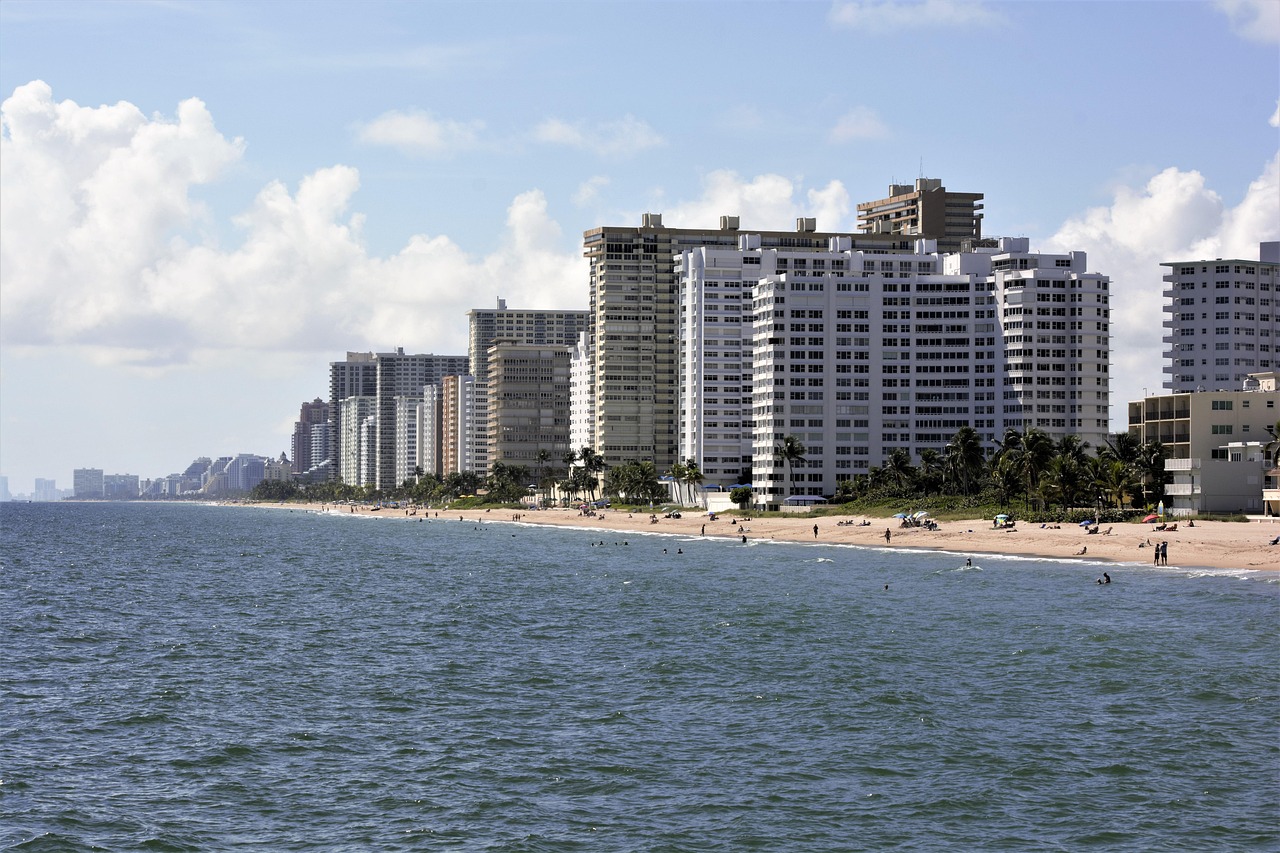
Broward County: Fort Lauderdale luxury condos on the Intracoastal and along the ocean run $700 to $1,500 per month. Gated townhome and villa communities in Coral Springs, Weston, and Plantation tend to fall in the $250 to $500 range.
Southwest Florida: Naples and Marco Island luxury buildings run $500 to $1,000 or more monthly. Sarasota and Tampa Bay luxury communities typically land between $300 and $800. Newer developments often carry higher dues because reserves are built properly from the start rather than retrofitted later.
Private club communities: Some of Florida’s most prestigious addresses, including Admirals Cove in Jupiter, Bay Colony in Naples, and Broken Sound in Boca Raton, layer mandatory club membership fees on top of HOA dues. Initiation fees for club access range from $30,000 to $200,000 at the elite end, with monthly club dues of $1,000 to $2,000 for golf and full amenity access. These are separate from and in addition to the HOA assessment. Budget accordingly.
Why Florida HOA Fees Have Been Rising
Florida HOA fees have risen approximately 68 percent over the past five years, according to industry data, a rate well above general inflation. Three forces drove most of that increase, and two of them are structural rather than temporary.
Insurance premiums. Florida’s property insurance market was already stressed before recent hurricane seasons. Commercial building policies, which is what condominium associations carry for the building structure, have seen dramatic premium increases. In some cases, associations saw their master policy renewal double or triple. That cost flows directly to unit owners through dues increases. Buildings in coastal zones, older construction, or with prior claims have been hit hardest.
Reserve mandates. Senate Bill 4-D, enacted in the wake of Surfside, required all condo buildings three or more habitable stories to complete Structural Integrity Reserve Studies and begin funding reserves to the level those studies require. HB 913, signed in June 2025, extended deadlines and allowed associations to fund reserves via loan rather than purely through dues, which provides some flexibility. But associations that ran for years with minimal reserve contributions are now making up the gap, through higher monthly dues, special assessments, or both.
Deferred maintenance and rising labor costs. Milestone inspections under Florida’s condominium inspection program revealed significant deferred maintenance in older buildings: concrete spalling, balcony deck deterioration, roof systems past replacement age, and aging mechanical systems. Remediation costs have risen with labor and materials inflation. Communities that delayed major capital projects for years are now doing all of it at once, at higher prices.
None of these factors are going away. Insurance costs may stabilize if Florida’s market conditions improve, but reserve funding requirements are permanent law and deferred maintenance doesn’t become cheaper with time.
Chapter 718 vs. Chapter 720: The Legal Distinction That Matters
Florida draws a legal distinction between two types of community associations, and knowing which statute governs your purchase shapes your due diligence rights.
Chapter 720 of the Florida Statutes governs homeowners’ associations, the type that applies to planned single-family communities, gated neighborhoods, and townhome developments that are not structured as condominiums. Chapter 720 establishes homeowner rights around fines, records access, architectural review decisions, and the lien and foreclosure process for unpaid assessments.
Chapter 718 governs condominium associations. It is considerably more prescriptive than Chapter 720 in areas including reserve requirements, structural inspections, budget transparency, financial reporting, and buyer disclosure obligations. Chapter 718 is why condominium purchases come with a review period after delivery of the association documents. On a resale condo, you have three days to cancel after receiving the condominium documents. On a new development, that window extends to 15 days.
The Florida Department of Business and Professional Regulation (DBPR) Condominium Division oversees licensed condominium associations and provides consumer resources for unit owners and buyers. For questions about a specific association’s compliance history or to file a complaint, the DBPR maintains records and a formal complaint process.
Under HB 1203, which took effect July 1, 2024, HOA associations with 100 or more parcels must maintain a website or app with governing documents, financial records, meeting minutes, and budgets accessible to members. Individual fines are capped at $100 per violation. These reforms give luxury buyers additional transparency and a baseline of board accountability that didn’t exist in prior years.
Red Flags to Watch in HOA Financials
Reviewing an association’s finances before closing is not optional. It is standard practice on any properly handled luxury purchase. Here’s what warrants attention:
Reserve fund adequacy. A reserve study estimates the cost of replacing major building components over time and what the fund balance should be at each point. A funded percentage below 70 percent is a yellow flag. Below 50 percent is a sign that future dues increases or special assessments are likely. After the SIRS requirements, Florida condominium associations of three or more stories must publish this data. Request it.
Delinquency rates. If 10 to 15 percent or more of unit owners are 60 or more days behind on dues, the association is losing operating cash. That shortfall typically gets made up through budget adjustments, reduced services, or special assessments against the paying members.
Pending litigation. Active lawsuits involving the association, particularly construction defect claims, insurance disputes, or board misconduct cases, carry legal costs that can land in the operating budget or be levied as a special assessment. Ask specifically for a disclosure of any pending or threatened litigation.
Fee increase history. Ask for dues rates over the past five years. A consistent pattern of 4 to 6 percent annual increases in a high-cost environment is different from a building that held fees flat for eight years and then raised them 40 percent after a structural inspection.
Management company stability. A recent change in management company often signals financial or governance stress that preceded the transition. Ask why the prior management company was replaced. The answer tells you something the financial statements may not.
Special Assessments: The Unexpected Bill
A special assessment is a one-time charge levied on all unit owners to fund an expense the operating budget can’t absorb. Both Chapter 718 and Chapter 720 authorize associations to levy them. In South Florida’s current environment, they are increasingly common.
Post-Surfside milestone inspections in older Florida condo buildings revealed deferred maintenance requiring immediate remediation. Special assessments in affected buildings have ranged from $5,000 to more than $150,000 per unit, depending on the severity of the structural work and the adequacy of the existing reserve fund. Buildings with underfunded reserves had no cushion to absorb these costs and passed them directly to owners, sometimes on short notice.
Before making an offer on any condominium, request the board meeting minutes for the past 24 months. Any discussion of a potential special assessment, including informal conversations about upcoming inspections or major repairs, will appear in those minutes. A seller who doesn’t know a special assessment is coming isn’t necessarily withholding information. The board may have discussed it only in executive session. Read the minutes regardless.
In single-family HOA communities, special assessments occur less frequently but still arise for significant capital projects: road resurfacing, entry monument replacement, major pool renovation, or security system overhauls. The amounts are typically lower than in condo situations, but the same principle applies. Review the minutes and ask directly whether any assessments are planned or under discussion.
When Dues Go Unpaid: HOA Enforcement in Florida
Florida law gives associations real enforcement authority when dues go delinquent, and the rules have direct implications for buyers taking title from a prior owner.
Under both Chapter 718 and Chapter 720, associations follow a structured process before filing a lien. The association must send written demand by certified and first-class mail, giving the owner 45 days to pay all amounts due. If the delinquency exceeds $1,000, the association can move forward with formal foreclosure proceedings after providing proper notice of intent. Florida HOAs do foreclose. This is not a theoretical risk.
The piece that surprises many buyers: joint and several liability for prior-owner assessments. Under Florida law, when you purchase a property within an HOA or condominium association, you become jointly and severally liable with the prior owner for any unpaid assessments that were due before the closing. The association can pursue the new owner for the previous owner’s delinquent dues, even when the buyer was unaware of the balance at closing.
This is why a status letter from the association is non-negotiable in any properly conducted Florida closing. Your real estate attorney or title company requests a written statement from the association confirming the account is current and that no special assessments have been levied or are anticipated. Your title insurance policy should also be structured to protect against undisclosed prior-owner liens. Neither step is optional on a serious luxury purchase.
HOA Due Diligence Checklist for Luxury Buyers
Before making an offer on any luxury property within a community association, these documents and questions belong in your due diligence process:
- Current monthly dues and a written history of fee changes for the past three to five years
- The most recent reserve study or SIRS report, including the funded percentage
- Current reserve fund balance
- Association financial statements for the past two fiscal years
- Board meeting minutes for the past 24 months
- Any pending or recently levied special assessments
- The master insurance policy declaration page and the last renewal date
- Disclosure of any pending or threatened litigation involving the association
- Current delinquency rate among unit owners
- Milestone inspection status for any condominium building three or more stories
- A status letter from the association confirming the account is current and no assessments are pending or anticipated
Florida law gives condominium buyers a review period after receiving the association documents: three days on a resale purchase, 15 days on a new development. Use that window. Review the financials and the minutes before it expires, not after. If the documents raise questions you can’t answer, your attorney or your broker should be able to get you answers before you waive the right to cancel.
Evaluating the Full Cost of Ownership in South Florida
HOA fees and association financials are not peripheral details on a luxury purchase in Florida. They are part of the cost structure and part of the risk profile of the property. A building with well-funded reserves and a competent, transparent board is a meaningfully different investment than one with deferred maintenance and a history of underfunded accounts, even if the asking price is identical.
Buyers who understand what they’re looking at, and have a broker who will actually read the financials instead of summarizing them verbally, close with fewer surprises. That’s the difference between a luxury purchase that holds its value and one that comes with an expensive education in South Florida condo law a year after closing.
At MJI Realty Group, we work with buyers across Miami-Dade, Broward, and Palm Beach County who want the full picture before committing. We know what the association documents should say and what it means when they don’t. If you’re evaluating luxury properties in South Florida and want a broker who treats HOA due diligence as seriously as pricing and location, reach out to our team.
Real estate decisions depend on individual circumstances; this is general information, not legal, tax, or investment advice for your specific situation.