Miami Luxury Condos in 2026: Two Markets in One City
The headline numbers are hard to argue with. Luxury condo sales above $3 million in Miami-Dade nearly tripled year-over-year in the first quarter of 2026. The $3 million to $5 million bracket surged 69 percent compared to Q1 2025. Overall, statewide luxury condo sales priced above $1 million climbed 41 percent in the same period, according to Florida Realtors.
But those numbers tell only part of the story. Miami’s condo market has fractured into two distinct segments. The ultra-luxury tier, broadly anything above $2 million, is running on demand that is largely price-insensitive. Cash buyers dominate, international money flows steadily, and the buyer pool chasing the top branded residences remains deep. Meanwhile, mid-tier condo inventory has piled up in several submarkets, giving buyers at that price point genuine negotiating power for the first time in years.
Understanding which market you are buying into, or selling within, determines your strategy, your timeline, and ultimately your outcome. A buyer acquiring a unit in a Brickell branded tower and a buyer acquiring a 2018-vintage resale condo two blocks away are operating in fundamentally different market conditions, even if they are writing checks of similar size.
This is not a market to approach with a single data point or a generic search. It requires submarket-by-submarket analysis, a clear view of the new supply pipeline, and a close read on who is actually transacting, and why.
The $1,000 Per Square Foot Benchmark
For years, $1,000 per square foot was discussed as a ceiling in Miami luxury condos, an aspirational figure that only trophy units could touch. That conversation is over. Miami’s luxury condo market hit a record $1,030 per square foot on an annual basis in 2025, and 2026 is pushing further from there.
In Brickell, the average price per square foot for high-end condos reached $1,045 in 2026, a 12 percent increase from the prior year. That is the resale market. New branded construction operates in a different range entirely. Pre-construction pricing in Brickell’s most in-demand projects is running approximately $1,650 per square foot, with specific branded residences from St. Regis, Cipriani, and Baccarat sitting at or above that benchmark. These are not inflated asking prices sitting unsold. Q1 2026 signed contracts in the top branded projects came in 12 to 18 percent above initial release pricing, meaning early buyers are already sitting on pre-close appreciation.
The $1,000 figure is now a floor for serious luxury product, not a ceiling. Buyers who treat it as a peak are misreading the market structure and potentially walking away from purchases that will look conservative three years from now.
For the broader Miami-Dade condo market, inventory sits at approximately 13 months of supply. That sounds elevated compared to a balanced market’s six-month benchmark, and it is. But the inventory figure is concentrated in specific building types and vintages. Strip away the mid-tier stock from 2014 to 2019 that is competing with newer supply, and the picture for true luxury product narrows considerably. Scarcity at the top of the market remains real.
Key Submarkets: Pricing and Positioning
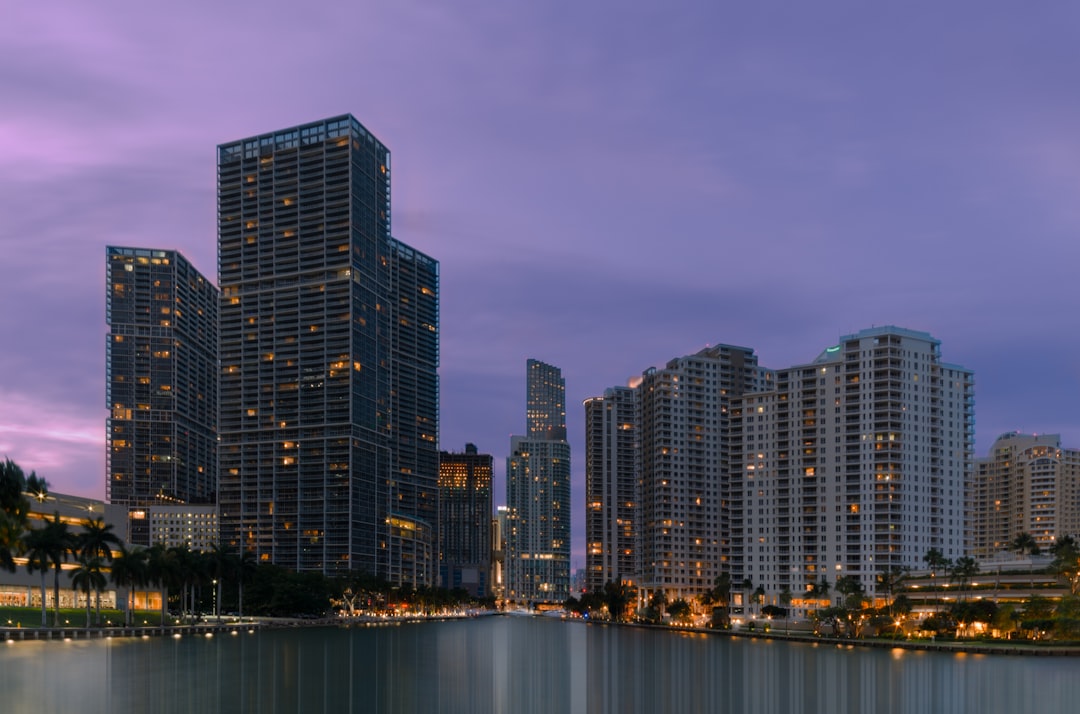
Miami is not one condo market. It is a collection of submarkets, each with its own supply dynamics, buyer profile, and price trajectory. Three stand out in 2026 for different reasons, and each tells a different story about where the market is heading.
Brickell: Branded Residences Redefine the Ceiling
Brickell is Miami’s financial district, and its condo market reflects that concentration of wealth and ambition. Resale pricing runs $700 to $1,045 per square foot depending on building vintage and positioning. But the story in Brickell right now is the branded residence pipeline, and it is repositioning the submarket’s price expectations at a pace most observers did not anticipate.
St. Regis Residences, Cipriani Residences, and Baccarat Residences are the names drawing the most attention, and the most serious capital. Branded product is outperforming non-branded buildings by 11 to 18 percent on price per square foot across the active development pipeline. Buyers at this level are paying for the hotel brand, the service platform, the concierge infrastructure, and the global name recognition that makes the asset liquid in any market cycle.
With roughly 4,254 units in Brickell’s active development pipeline, new supply is a legitimate consideration for buyers and investors. The submarket sits at approximately 17 months of inventory as of Q1 2026. Resale buyers in existing buildings have more negotiating room than at any point in the last four years. Buyers in the top branded towers have very little. The bifurcation is that pronounced.
Edgewater: Waterfront Value with Upside
Edgewater offers arguably the best value-to-waterfront ratio in Miami right now. Resale pricing runs $800 to $1,100 per square foot, above Brickell’s resale band on a per-foot basis, but the neighborhood’s bay access, proximity to the Design District and Wynwood, and pace of appreciation justify the premium for buyers who know what to look for.
The Edgewater luxury market is going through a period of recalibration in 2026. Some buildings carry more inventory than is typical, which gives careful buyers a real opening. This is not a distressed market. It is a market where patience and precision pay off, and where a buyer working with the right broker can close at terms that would have been unavailable in 2022 or 2023.
For investors, Edgewater’s rental demand remains strong. Its walkability, the concentration of restaurants and retail along Biscayne Boulevard, and its central position between Downtown and Miami Beach make it a consistent performer for long-term hold strategies.
Coconut Grove and Coral Gables: Fastest-Moving Segment
If transaction speed matters, Coconut Grove and Coral Gables are worth serious attention. In 2025, luxury condos in this combined submarket sold at a median pace of 74 days, the fastest of any Miami submarket tracked. The reasons are structural rather than cyclical.
Zoning constraints in both neighborhoods limit new supply in a way that Brickell and Edgewater cannot replicate. The neighborhood character is established: waterfront parks, mature tree canopy, independent restaurants, and a resident culture that skews toward long-term ownership rather than speculative flipping. The buyer pool, often primary-residence purchasers and families, is sticky.
This is not the highest-price-per-foot market in Miami. But it may be the most consistently liquid one at the luxury level, and consistency of liquidity is worth a great deal when the broader market goes through cycles of volatility.
The New Supply Pipeline: Opportunity or Pressure
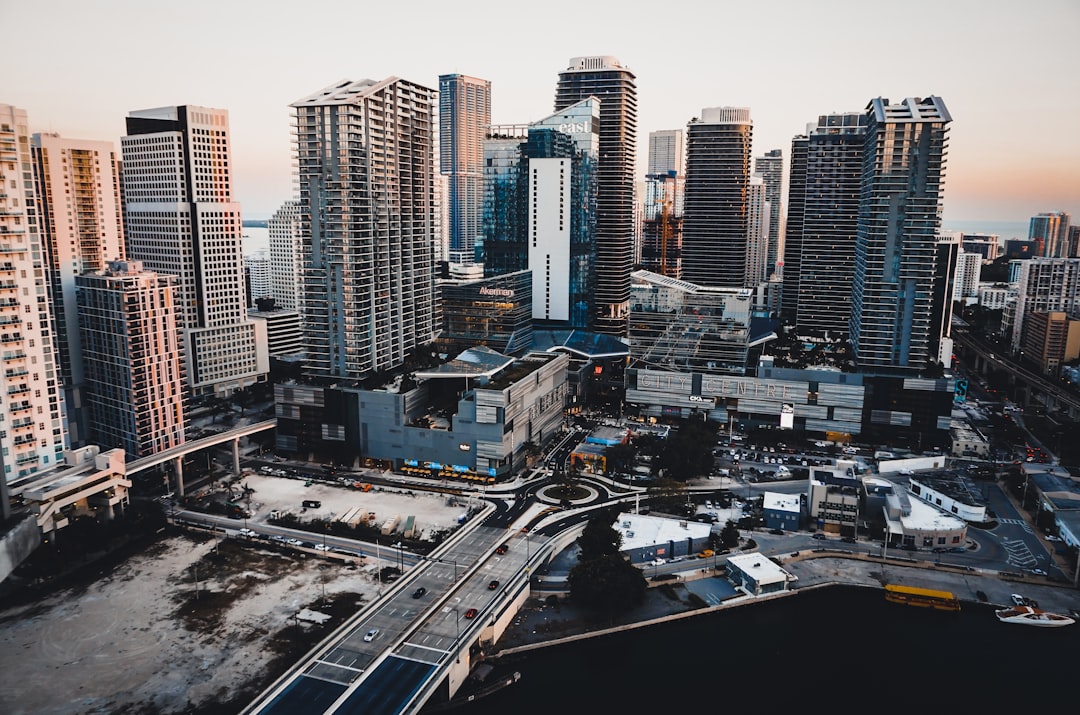
South Florida has approximately 9,026 condo units in the active construction pipeline. Nearly half, an estimated 4,254 units, are concentrated in Brickell alone. That concentration matters enormously for buyers and investors who are trying to think past the closing date.
More supply is not inherently bad. Miami’s population growth, its emergence as a global financial and technology hub, and continued migration from high-tax states in the Northeast and Midwest keep demand elevated in ways that most major U.S. cities cannot replicate. But supply concentration in one submarket can create short-term pricing pressure, particularly in buildings with similar positioning and amenity profiles competing against each other for the same buyer.
The projects absorbing well in 2026 are the ones with genuine differentiation: branded services, architectural distinction, specific water or park views, or amenity platforms that competing buildings cannot match. Projects without that differentiation are feeling the pressure. Developers of mid-tier projects are offering concessions, extended closings, and price adjustments that were uncommon two years ago.
Pre-construction reservation volume across Miami-Dade ran 14 percent above Q4 2025 in early 2026, signaling that demand for the right product remains strong. But that demand is concentrated. Resale buyers in buildings facing pipeline competition have more room to negotiate than at any point since 2020. Knowing which buildings face that competition, and which are insulated from it, is the critical research task before making an offer.
Who Is Buying and How They Are Buying It
The buyer profile for Miami luxury condos has not changed dramatically in the last two years, but it has sharpened. Three groups drive the bulk of the volume above $2 million.
Cash dominates. More than 40 percent of all Miami real estate transactions close without financing, and in the $2 million and above segment, that share climbs further. The interest rate sensitivity that throttled transaction volume in many U.S. markets between 2023 and 2024 had a muted effect on Miami’s true luxury segment precisely because so much of it does not depend on a mortgage. The National Association of REALTORS projects continued improvement in home sales through the second half of 2026, with Miami’s luxury end outperforming national averages as rate-sensitive buyers return to a market that luxury buyers never left.
International buyers remain a structural driver. South American buyers, particularly from Colombia, Brazil, and Argentina, continue to treat Miami as a stable-currency, hard-asset destination. European buyers, drawn by time zone alignment and direct transatlantic flight access from Miami International Airport, have added a meaningful layer of demand. Foreign national buyers often close in cash or through private banking relationships that operate outside the conventional U.S. mortgage market.
Domestic relocators from New York, New Jersey, California, and Illinois continue to arrive in numbers. Many come with liquidity from the sale of a primary residence in a high-tax state, a preference for a cash purchase, and a clear sense of what they want. They have done the research. They move decisively. And they consistently outbid hesitant buyers who need multiple walkthroughs and extended due diligence periods to feel confident.
Pre-Construction vs. Resale: Different Bets

The decision between pre-construction and resale is not simply a matter of price. It is a fundamental difference in what you are acquiring and why you are acquiring it.
Pre-construction buyers in Miami’s luxury market in 2026 are paying a premium for customization, brand affiliation, new building warranties, and the opportunity to enter a project before it reaches peak pricing at delivery. Q1 2026 signed contracts came in 12 to 18 percent above initial release pricing in the top branded projects. Buyers who got in early on Cipriani Residences or St. Regis are already sitting on pre-close appreciation. For investors with a two-to-four-year horizon, the pre-construction entry point in a strong branded project has historically been the best way to generate returns in Miami’s luxury segment.
The tradeoff is time, certainty, and carrying cost. Pre-construction delivers in two to four years, sometimes longer. Building timelines slip. The buyer’s financial picture at delivery may differ from the picture at signing. And unlike a resale purchase, you cannot inspect what you are buying because it does not yet exist.
Resale buyers trade customization for immediacy and information. You can inspect the unit, see the building’s actual condition, review HOA financials, walk the amenity deck, and close in 30 to 60 days. In a market with elevated inventory in certain buildings, resale buyers at the luxury level currently have meaningful negotiating room, particularly in buildings that sit outside the top branded tier and face genuine competition from the new supply pipeline.
For income-focused investors, a well-selected resale unit in a high-demand building often generates better near-term cash flow than a pre-construction unit still two years from delivery. The math depends entirely on the specific building, the submarket, and the investor’s time horizon. Both strategies work. Very few investors succeed with either one without deep knowledge of the specific asset they are buying.
What to Expect Through the Rest of 2026
The outlook for Miami luxury condos through the end of 2026 is one of continued bifurcation. The top tier and the middle of the market are moving in different directions, and that gap is widening rather than closing.
Branded residences, trophy waterfront units, and best-in-class buildings in Brickell, Edgewater, and the Grove will continue to perform. Demand at this level is driven by buyers for whom Miami is a deliberate financial and lifestyle choice, not a response to mortgage rate cycles. That buyer is not going away.
The middle of the market, buildings priced at $1,000 to $1,800 per square foot without a brand affiliation, a distinctive amenity profile, or a compelling location story, faces more competition. Sellers in this segment will need to price precisely. Buyers will have time and options.
Florida Realtors data shows statewide condo sales rose approximately 7 percent year-over-year in April 2026, with new pending sales up nearly 15 percent. The adjustment period following post-Surfside milestone inspection and reserve requirements is easing, and buyers who had been waiting on the sidelines while the regulatory picture settled are beginning to return. That is a meaningful tailwind for overall condo volume through the back half of the year.
Moderate price appreciation of 2 to 4 percent in the broad market, with stronger performance in the ultra-luxury segment, is the most realistic scenario through December 2026. Buyers who find the right asset in the right building and close in the next 90 days are likely to look back on the purchase as a well-timed one.
Working with the Right Brokerage
Miami’s luxury condo market rewards preparation and precise execution. The wrong building in the right neighborhood can cost you years of opportunity cost. The right building acquired at the wrong moment, particularly in a submarket with 17 months of supply and a competing pipeline, is equally expensive. Getting both right at the same time requires market knowledge that goes deeper than public listing data.
MJI Realty Group works with buyers and investors across South Florida’s luxury condo segment, from Brickell and Edgewater to Palm Beach and Sarasota. We have direct access to off-market inventory, relationships with developers on pre-construction allocations, and the market depth to help clients distinguish between buildings that are priced correctly for current conditions and those that are not. Our clients are typically moving decisively, with capital ready, and without the luxury of learning on the job.
If you are evaluating a Miami luxury condo purchase or investment in 2026, the data is available to anyone willing to look. What matters is knowing how to read it, which numbers are signal and which are noise, and which buildings merit a serious look at this specific moment in the cycle. Start with a conversation.
Real estate decisions depend on individual circumstances. This article provides general market information and is not legal, tax, or investment advice for your specific situation.