Miami’s New Luxury Category: Branded Residences

Miami now ranks as the second largest market in the world for branded residences, trailing only Dubai. Dozens of towers already carry a hotel or fashion house’s name on the awning, and dozens more are under construction from Brickell to Sunny Isles Beach. Aston Martin, Missoni, Waldorf Astoria, St. Regis, Bentley, Baccarat, and Cipriani have all attached their names to South Florida condo towers in the past decade, and the pace has not slowed heading into 2026.
For an owner-occupant, the pitch is straightforward: pay a premium and get a condo built to a global brand’s design and service standard, with amenities that read closer to a five-star resort than a typical high-rise. For an investor, the pitch is different. Branded product has outperformed the broader luxury condo market in recent years, and brokers report it tends to hold value better in a downturn, because the brand name, not just the building, carries part of the resale story.
Both pitches are true in part. Neither is the whole picture. Before signing a reservation agreement on a branded unit in Miami, Fort Lauderdale, or Palm Beach, a buyer needs to understand what the brand actually delivers, what it costs beyond the purchase price, and what happens to the unit’s value if the management agreement between the developer and the brand ever ends.
This guide walks through how the branded segment is structured, where the product concentrates in South Florida, what the premium buys and what it does not, and the specific due diligence a buyer’s attorney should run on the management agreement before money changes hands.
What Actually Makes a Residence Branded
Not every unit marketed with a famous name attached is a true branded residence. The industry sorts these projects into three tiers, and the differences matter to a buyer’s contract and to the building’s long-term operations.
- Hotel-branded and hotel-managed. A hotel operator such as Waldorf Astoria, St. Regis, or Ritz-Carlton signs a long-term management agreement with the building’s condo association or a separate owner’s entity. Staff, standards, and the brand name all come from the operator, and residents typically have access to hotel-style services on the same property.
- Branded and licensed, not operated. A luxury or automotive brand such as Aston Martin, Bentley, or Missoni licenses its name and design language to a developer for a fee, but a separate management company handles day-to-day operations. The design details are real. The operational connection to the brand is thinner.
- Designer-name towers without a global hospitality brand. Some buildings use an interior designer’s or architect’s name as the marketing hook rather than a hotel or luxury brand. These can be well-built towers, but they generally do not command the resale premium tied to genuine brand recognition.
The distinction shows up in the documents before it shows up in the lobby. A serious buyer reads the management agreement, not just the sales brochure, to find out which tier a specific building actually falls into.
Where Branded Residences Are Concentrated in South Florida
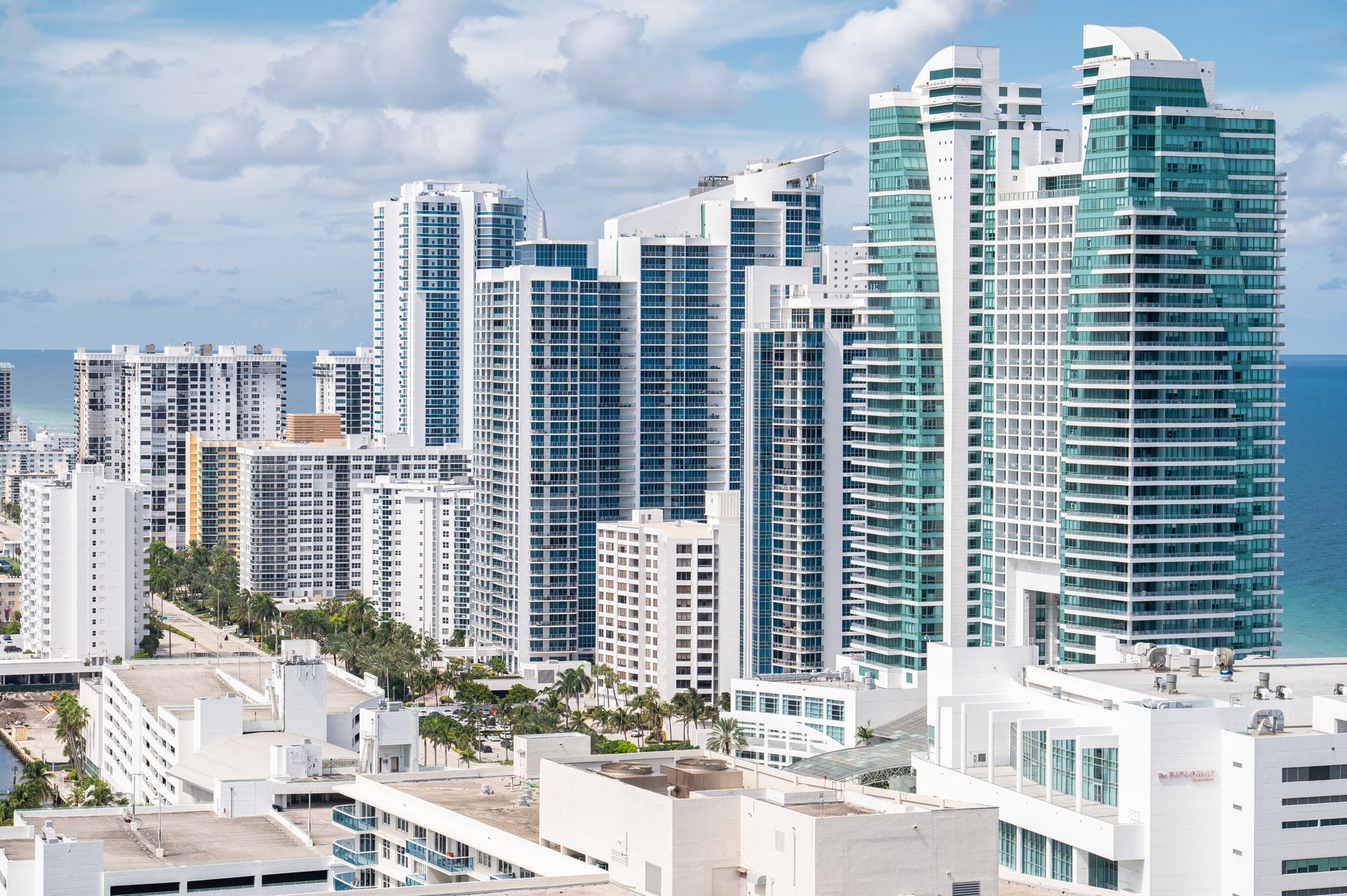
Miami-Dade County holds the largest concentration of branded product in the state, and the towers cluster in a handful of submarkets. Brickell and Edgewater carry several hotel-branded towers within walking distance of each other, trading on proximity to downtown Miami’s financial district and Biscayne Bay views. Sunny Isles Beach has become the address of choice for ultra-luxury branded towers with direct beach frontage, including projects tied to automotive and fashion brands rather than hotel operators.
The broader Miami waterfront corridor has added several branded towers built around wellness and design-forward hospitality names, aimed at buyers who want resort-style amenities without leaving the building. Further north, Fort Lauderdale’s Las Olas corridor and central beach have picked up their own branded product, generally priced below Miami’s ultra-luxury towers but still commanding a premium over comparable non-branded new construction in the same submarket.
Beyond Miami-Dade: Fort Lauderdale and West Palm Beach
West Palm Beach and Palm Beach proper have been slower to add branded towers, in part because height and density limits in Palm Beach restrict the kind of large-footprint building that hospitality brands typically require. Buyers and investors looking for branded product with more room to grow have generally focused on West Palm Beach’s downtown core and on Fort Lauderdale, where new construction pipelines remain active and land assembly is easier than on the barrier island.
The Price Premium and What It Buys

Branded units in Miami routinely sell for a meaningful premium per square foot over comparable non-branded new construction in the same building class, and buyers should expect that premium to run well into double digits as a percentage of price. The premium buys three things, roughly in this order of importance.
- Design and construction standards. Brand agreements typically require specific finishes, ceiling heights, and building systems that a non-branded developer is not contractually bound to deliver.
- Service level. Hotel-operated buildings offer housekeeping, in-residence dining, valet, and concierge service drawn from the operator’s global standards, not a locally hired staff working from a locally written manual.
- Resale story. A recognizable brand name gives a listing agent a shorthand pitch to future buyers, particularly international buyers who may not know the local submarket well but do know the brand.
What the premium does not reliably buy is a proportional increase in square footage, view quality, or floor plan efficiency. Two units with nearly identical layouts and views, one branded and one not, in adjacent buildings can carry a price gap that has little to do with construction cost and everything to do with the name on the awning. That gap is effectively the brand’s fee, collected through the sale price rather than as a visible line item at closing.
Who Is Buying Branded Residences in Florida
Florida remains the top destination for foreign buyers of U.S. residential real estate, attracting roughly one in five international purchases nationwide, with Canadian and Latin American buyers making up the largest share, according to the National Association of REALTORS® international transactions report. Branded residences draw a disproportionate share of that international demand, because a recognizable global name reduces the due diligence burden for a buyer purchasing from overseas or through a representative.
Domestic buyers fall into two overlapping groups. The first is the owner-occupant relocating from a high-tax state who wants resort-level service without joining a private club or paying separately for concierge and housekeeping. The second is the investor who treats the unit as a rental asset, often through the building’s own rental program, and views the brand premium as a way to command a higher nightly or seasonal rate than an unbranded comparable unit nearby.
Both groups need to think about the exit as carefully as the entry. A foreign seller of Florida real estate faces withholding under the Foreign Investment in Real Property Tax Act at closing, a mechanic that a buyer’s or seller’s broker should walk through well before a listing goes live. The IRS FIRPTA withholding rules spell out the withholding rate and the exceptions that can apply.
Due Diligence: Reading the Management Agreement

The condominium documents for a branded tower include everything a standard Florida condo purchase requires, plus one document that does not exist in a non-branded building: the management agreement between the condo association and the brand’s operating company. That agreement, not the marketing brochure, controls what residents actually receive and for how long.
A buyer’s attorney should confirm, in the management agreement itself, the term of the agreement, the renewal conditions, the fee structure the brand charges the association, and whether the brand can terminate for the association’s non-performance as well as the reverse. Florida’s condominium statute requires developers to provide governing documents before closing, and the state’s Florida Department of Business and Professional Regulation’s condominium division publishes the disclosure requirements that apply to buyers statewide.
The same review should cover reserve funding for building systems that the brand agreement requires, such as specific lobby, spa, or restaurant finishes that cost more to maintain than a standard amenity deck. A building can be fully funded on paper for ordinary reserves and still underfunded for the brand-specific systems its agreement locks it into. Ask for the last two years of association financials, not just the current budget, before assuming the monthly fee will hold steady.
What Happens When the Brand Contract Ends
Management agreements run for a set term, often twenty to thirty years, and they can end without the brand renewing. When that happens, the building keeps its physical design but loses the brand name, the operator staff, and the marketing story that justified part of the original premium. A handful of formerly branded towers around the country have already gone through this transition, rebranding under a new operator or reverting to independent management. Resale value in those buildings tends to compress toward the level of comparable unbranded product, which is exactly the risk a buyer pays a premium to avoid at purchase.
None of this means branded product is a bad purchase. It means the agreement’s term and renewal language deserve as much attention as the finish schedule, and a buyer should ask specifically how many years remain on the current brand agreement before signing a reservation contract.
Financing, Closing Costs, and Taxes on a Branded Purchase
Financing a branded residence generally follows the same path as any Florida condo purchase, with two added wrinkles. Pre-construction branded units usually require deposits of 20 to 50 percent of the purchase price paid in installments during construction, well above the 10 to 20 percent typical of conventional new construction, because brand agreements often push developers to demonstrate stronger buyer commitment before breaking ground. Lenders also scrutinize a building’s rental program rules closely, since some hotel-operated buildings restrict owner rentals in ways that affect a unit’s eligibility as loan collateral.
Closing costs track standard Florida practice. Florida charges documentary stamp tax on the deed at $0.70 per $100 of the purchase price in every county except Miami-Dade, where an additional surtax applies to most property types. The Florida Department of Revenue’s documentary stamp tax guidance lays out the exact calculation. On a multi-million dollar branded unit, that tax alone can run into six figures, and it is a cost buyers frequently underestimate when budgeting past the purchase price and brand premium.
Investors using a branded unit as part of a portfolio should also confirm whether the property qualifies for 1031 exchange treatment under the same rules as any other investment real estate. The brand name has no bearing on the exchange’s tax treatment, only the property’s use.
Is a Branded Residence the Right Fit
A branded residence makes sense for a buyer who genuinely wants the service level and is prepared to pay for it, or for an investor who has run the numbers on rental performance rather than assumed the brand name alone will carry a rental listing. It makes less sense for a buyer chasing the name without weighing the management agreement’s term, the building’s rental restrictions, and the resale story if the brand ever changes.
At MJI Realty Group, we work with both buyer types across Miami-Dade, Broward, and Palm Beach, and we walk clients through the management agreement and building financials before an offer goes in, not after. Discretion matters here too. A number of branded-residence buyers, particularly international clients, prefer that a purchase this size not become public commentary before it closes, and we structure offers accordingly.
Real estate decisions depend on individual circumstances; this is general information, not legal, tax, or investment advice for your specific situation. Buyers considering a branded residence purchase in South Florida should consult a Florida real estate attorney and a licensed tax professional before signing a reservation agreement.